
Bristol Stool Chart for IBS: How to Identify Your Subtype (IBS-C, IBS-D, IBS-M)
By the Aidy Editorial Team
First Published Oct 2, 2025Last Updated Aug 4, 2026
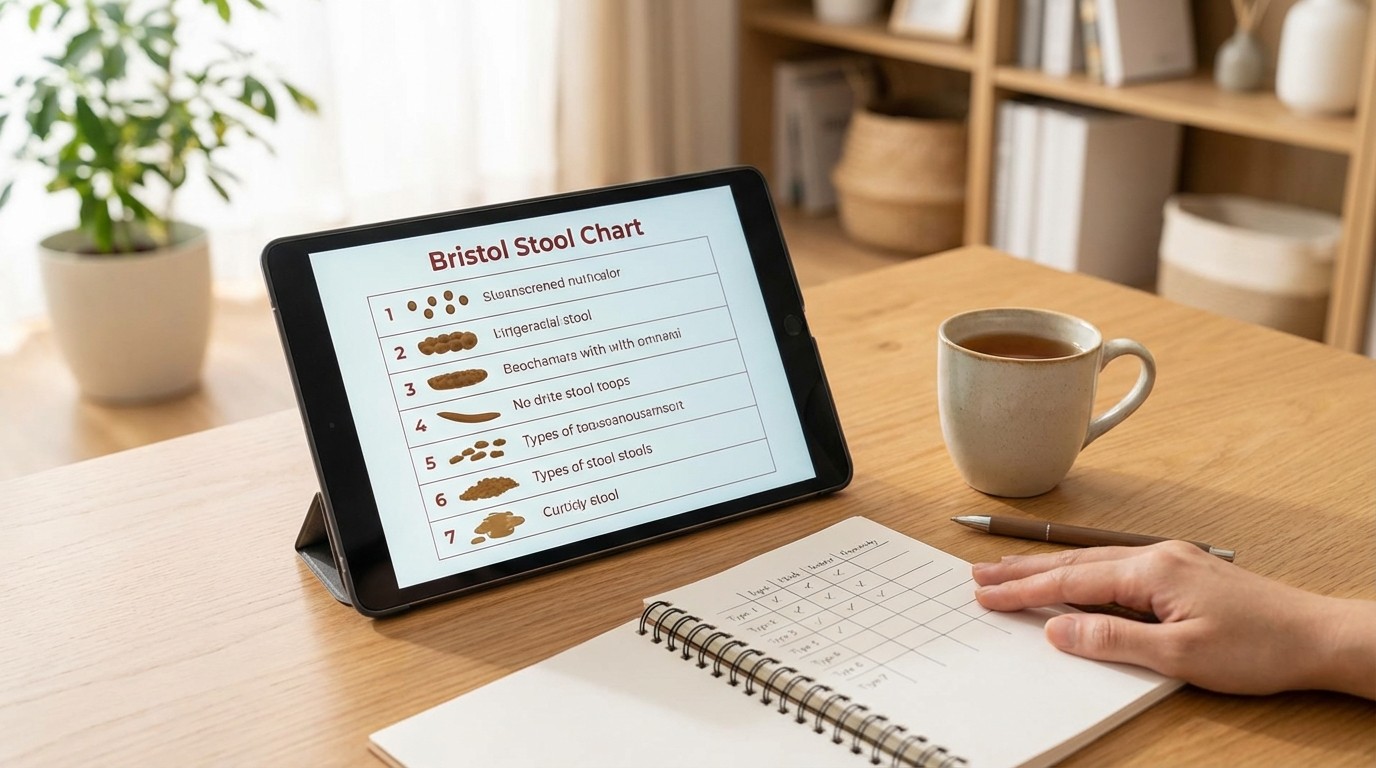
Changes in bowel habits are a core part of irritable bowel syndrome (IBS), so having a simple, consistent way to describe stool can make symptom tracking feel less confusing. The Bristol Stool Chart (also called the Bristol Stool Form Scale, a stool form scale) turns stool appearance into a number from 1 to 7. This can support clearer notes for a stool diary and help a clinician consider common IBS patterns. IBS is generally described as a group of symptoms that include repeated abdominal pain plus changes in bowel movements (diarrhea, constipation, or both), without visible signs of damage or disease in the digestive tract, and diagnosis often starts with reviewing symptom patterns and sometimes tests to rule out other causes. [1]
Bristol Stool Chart basics (types 1–7 stool)
The Bristol Stool Chart groups stool into seven types based on shape and texture , from very hard to fully liquid. At the extremes, stool form also tends to reflect how quickly stool is moving through the colon (faster or slower transit). [2]
Here is a plain-language guide to the types 1–7 stool scale:
Type 1: Separate hard lumps, hard to pass
Type 2: Sausage-shaped but lumpy
Type 3: Like a sausage with cracks on the surface
Type 4: Like a sausage or snake, smooth and soft
Type 5: Soft blobs with clear edges
Type 6: Fluffy pieces with ragged edges, mushy
Type 7: Watery, no solid pieces, entirely liquid [2]
Many resources summarize this as:
- Types 1–2: more constipation-leaning stool form
- Types 3–4: often considered more typical stool form
- Types 6–7: more diarrhea-leaning stool form (Type 5 can sometimes be a “softer” transition)
A key “quick win” for tracking is consistency. Picking the closest match each time and logging it the same way builds a clearer pattern over days and weeks than trying to be perfect on any single bowel movement.
How stool form connects to IBS subtypes (IBS-C, IBS-D, IBS-M)
When IBS is classified into subtypes based on bowel habits, many clinicians use Rome criteria that focus on abdominal pain plus stool changes. Rome IV describes IBS as recurrent abdominal pain (on average at least 1 day per week in the last 3 months) linked to defecation and/or changes in stool frequency or stool form, with symptom onset at least 6 months before diagnosis. [3]
For IBS subtypes based on stool form , gastroenterology guidelines describe using the Bristol numbers on days with abnormal bowel movements, and a 2-week daily diary can improve accuracy. The common subtype cutoffs use a 25% threshold for hard stools (Types 1–2) and loose stools (Types 6–7): [4]
IBS-C (constipation-predominant): >25% Type 1–2 and <25% Type 6–7
IBS-D (diarrhea-predominant): >25% Type 6–7 and <25% Type 1–2
IBS-M (mixed): >25% Type 1–2 and >25% Type 6–7 [4]
A simple way to use this in a stool diary is to log each bowel movement with:
- Bristol type (1–7)
- time of day
- urgency (none, mild, strong)
- abdominal pain (none, mild, moderate, severe)
After 2 weeks, counting how many bowel movements were Types 1–2 and how many were Types 6–7 (especially on abnormal days) often makes the overall pattern easier to summarize for a healthcare visit.
Primary call to action: Start a stool log in Aidy to capture Bristol type, symptoms, and patterns in one place.
References
This article is for educational purposes and is not medical advice. It is researched against current AGA clinical guidelines and peer-reviewed sources. Always discuss treatment decisions with your care team.