
Crohn's Disease and Body Image: What Nobody Talks About
By the Aidy Editorial Team
First Published Feb 25, 2026Last Updated Aug 4, 2026
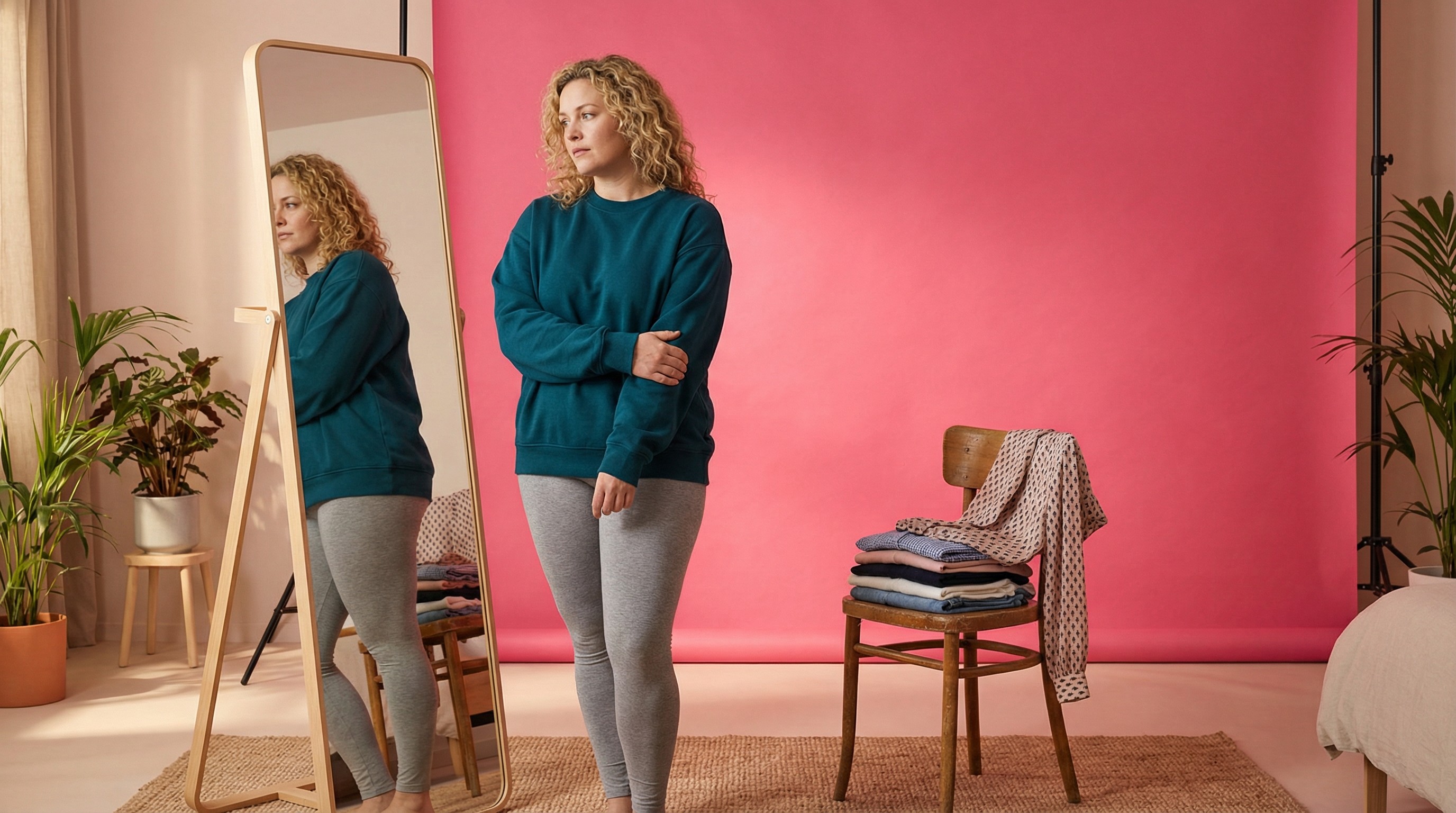
When you live with Crohn's disease, your body can feel like it belongs to someone else. Weight drops without warning during a flare, then climbs back when steroids enter the picture. Scars accumulate. Your face changes shape. Clothes that fit last month hang loose or pull tight. These shifts happen on top of an already exhausting illness, and yet Crohn's disease body image struggles rarely get the attention they deserve in clinical conversations or even among patients themselves. This guide addresses the full range of Crohn's disease appearance changes, what drives them, and what actually helps.
The Many Ways Crohn's Changes Your Body
Crohn's affects appearance through several overlapping pathways. Active disease often causes rapid, involuntary weight loss because inflammation reduces nutrient absorption and suppresses appetite. Research shows that chronic malabsorption can lead to visible muscle wasting, particularly during prolonged flares. Crohn's weight loss body image concerns are among the most common reasons patients report feeling disconnected from their own reflection.
On the other side, medications bring their own changes. Steroid weight gain in Crohn's is a well-documented side effect of prednisone, which redistributes fat to the face, neck, and abdomen. The characteristic "moon face" can appear within weeks of starting treatment. Even short courses of corticosteroids can produce noticeable puffiness, and patients who cycle on and off steroids may experience repeated, unpredictable shifts in how they look. Biologic therapies, while generally easier on appearance, can cause skin reactions or hair changes in some people.
Surgery adds another layer. Resections leave abdominal scars. Ostomy surgery means adapting to a pouch worn on the body. Fistula drainage can affect the skin around the perianal area. Each of these changes carries its own psychological weight, and they often compound over time.
The Emotional Cost That Goes Unspoken
The psychological impact of these physical changes is significant. According to MyCrohnsAndColitisTeam, more than 40 percent of people with IBD report that body image concerns interfere with their quality of life and desire for social interaction. IBD body image self esteem problems frequently show up as withdrawal from relationships, avoidance of intimacy, and reluctance to participate in activities that involve being seen (swimming, changing in locker rooms, wearing fitted clothing).
What makes this particularly difficult is the unpredictability. Unlike a stable condition where you can adjust once and move forward, Crohn's keeps shifting the baseline. You might feel comfortable in your body during remission, only to lose 15 pounds in a flare and then gain 20 on prednisone. That constant recalibration wears on self-image in ways that go beyond any single change. Researchers have noted that people with IBD may be at heightened risk for body dysmorphia because of symptom-driven changes like abdominal distension, bloating, and visible fatigue.
The isolation compounds things further. Crohn's is largely invisible to others, which means the gap between how you feel in your body and how others perceive you can be wide and disorienting.
Practical Strategies That Actually Help
Coping with Crohn's disease body image challenges requires approaches that account for the disease's unpredictability. Cognitive behavioral therapy (CBT) has strong evidence for helping people identify and reframe negative thought patterns about appearance. Working with a therapist who understands chronic illness can make a real difference, because generic body image advice often misses the medical complexity involved.
Beyond therapy, three practical shifts tend to help:
Asking your gastroenterologist about steroid-sparing treatment options to reduce the frequency of corticosteroid-related appearance changes
Connecting with other Crohn's patients through communities like the Crohn's & Colitis Foundation where body image conversations are normalized
Shifting your frame of reference from how your body looks to what your body is managing, which is a perspective that acknowledges the real work of living with a chronic disease
Clothing strategies also matter in a practical sense. Keeping a small wardrobe that spans two or three sizes removes the daily confrontation with weight fluctuation. Choosing soft, adjustable waistbands can reduce physical discomfort and the emotional trigger of clothes that no longer fit.
Redefining Your Relationship with Your Body
Long-term, the most sustainable approach to IBD body image self esteem is building a relationship with your body based on understanding rather than appearance. This is not about forced positivity or pretending the changes do not matter. It is about gathering enough information to separate what you can influence from what the disease controls.
Tracking your symptoms and triggers with Aidy helps you focus on understanding your body rather than fighting it. When you can see patterns in your flares, identify which medications affect your weight, and log how you feel physically and emotionally over time, data replaces anxiety with awareness. You move from reacting to your body's changes toward anticipating and managing them.
Crohn's disease body image struggles are real, common, and worth taking seriously. They are not vanity. They are a natural response to a disease that changes how you look and feel in ways you did not choose. Naming that reality is the first step toward navigating it with less shame and more self-knowledge.
This article is for educational purposes and is not medical advice. It is researched against current AGA clinical guidelines and peer-reviewed sources. Always discuss treatment decisions with your care team.
When a Food Diary Becomes Too Restrictive: IBD Warning Signs ›