
Peppermint Oil for IBS: Does It Work? How to Take It (and Who Should Avoid It)
By the Aidy Editorial Team
First Published Oct 9, 2025Last Updated Aug 4, 2026
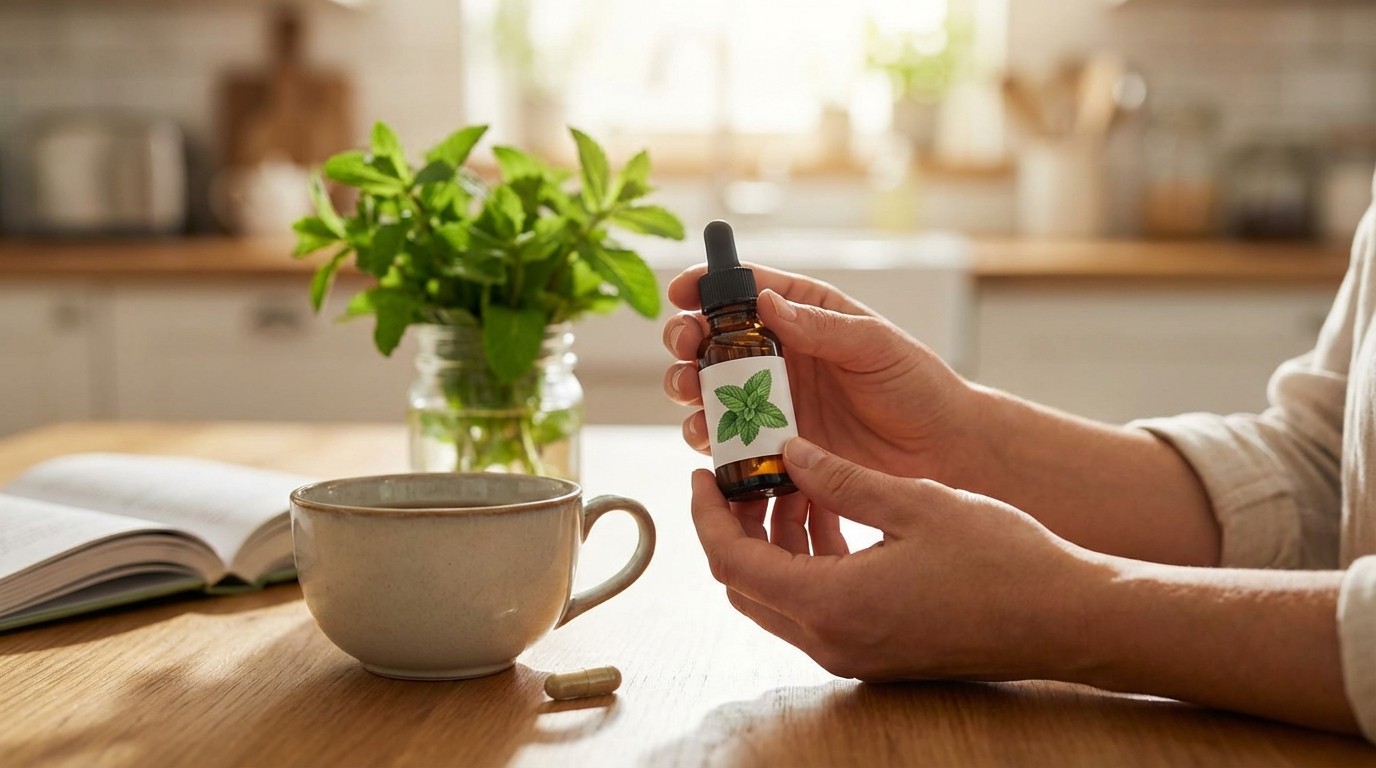
Peppermint oil is a popular supplement choice for irritable bowel syndrome (IBS), especially when cramping or lower belly pain is a main problem. IBS can cause recurring abdominal pain, bloating, gas, constipation, diarrhea, or a mix of both. Because symptoms can come and go, many people look for “quick win” options that feel low risk and easy to try. Peppermint oil may fit that role for some, but the form, timing, and side effects matter, especially for anyone who also deals with reflux.
Peppermint oil for IBS: what the evidence really shows (and why “enteric-coated” matters)
Most research on peppermint oil for IBS looks at enteric-coated peppermint oil capsules. “Enteric-coated” means the capsule has a special coating designed to pass through the stomach and open lower in the digestive tract. This is important because it may reduce peppermint-tasting burps and may lower the chance of upper stomach irritation for some people.
In the 2021 American College of Gastroenterology guideline for IBS, peppermint is suggested as an option to help relieve overall IBS symptoms (a conditional recommendation, with low-quality evidence). [1] Peppermint oil is thought to work as an antispasmodic, meaning it can help relax the smooth muscle of the gut, which may ease cramping.
When studies are pooled together, peppermint oil tends to look better than placebo for IBS symptoms, especially abdominal pain. A 2022 systematic review and meta-analysis of randomized controlled trials (10 trials, 1,030 participants) found peppermint oil was more effective than placebo for improving global IBS symptoms and reducing abdominal pain, but side effects were more common. [2]
Peppermint tea is a different story. Peppermint leaf and tea may feel soothing, but IBS evidence mainly supports peppermint oil in enteric-coated capsules , not tea, and the overall research on peppermint leaf is limited. [3]
How to take peppermint oil (typical dosing), side effects, and who should avoid it
Peppermint oil is usually taken as a capsule, not as essential oil. Many products and clinical studies use dosing schedules like “before meals,” but label directions vary. The National Health Service (NHS) describes a common approach for peppermint oil capsules used for IBS in adults and children ages 12 and up as 1 capsule three times a day , taken 30 to 60 minutes before food , swallowing the capsule whole. The NHS also notes leaving a 2-hour gap between peppermint oil and indigestion medicines (like antacids), and not using over-the-counter peppermint oil longer than 2 weeks without checking with a clinician. [4]
Side effects are often mild, but they can matter. The most common issue is heartburn or indigestion , which is why gastroesophageal reflux disease (GERD) and frequent reflux symptoms are a key “peppermint caution” area. Other possible side effects include headache, and rarely, more serious reactions such as allergy symptoms. [5]
Peppermint oil is not right for everyone. The NHS lists situations where peppermint oil may be unsuitable, including a history of allergy to peppermint oil, liver disease or gallstones , pregnancy, and certain digestive problems such as reflux disease (GERD) and ulcerative colitis, among others. [6]
To make a supplement trial more meaningful, tracking helps. Aidy can be used to track supplement trials by logging the start date, dose timing, abdominal pain scores, bloating, stool pattern changes, and any reflux symptoms, making it easier to decide what seems helpful versus what adds side effects.
References
This article is for educational purposes and is not medical advice. It is researched against current AGA clinical guidelines and peer-reviewed sources. Always discuss treatment decisions with your care team.