
Probiotics for IBS: Which Strains Are Worth Trying (and How Long to Test)
By the Aidy Editorial Team
First Published Oct 15, 2025Last Updated Aug 4, 2026
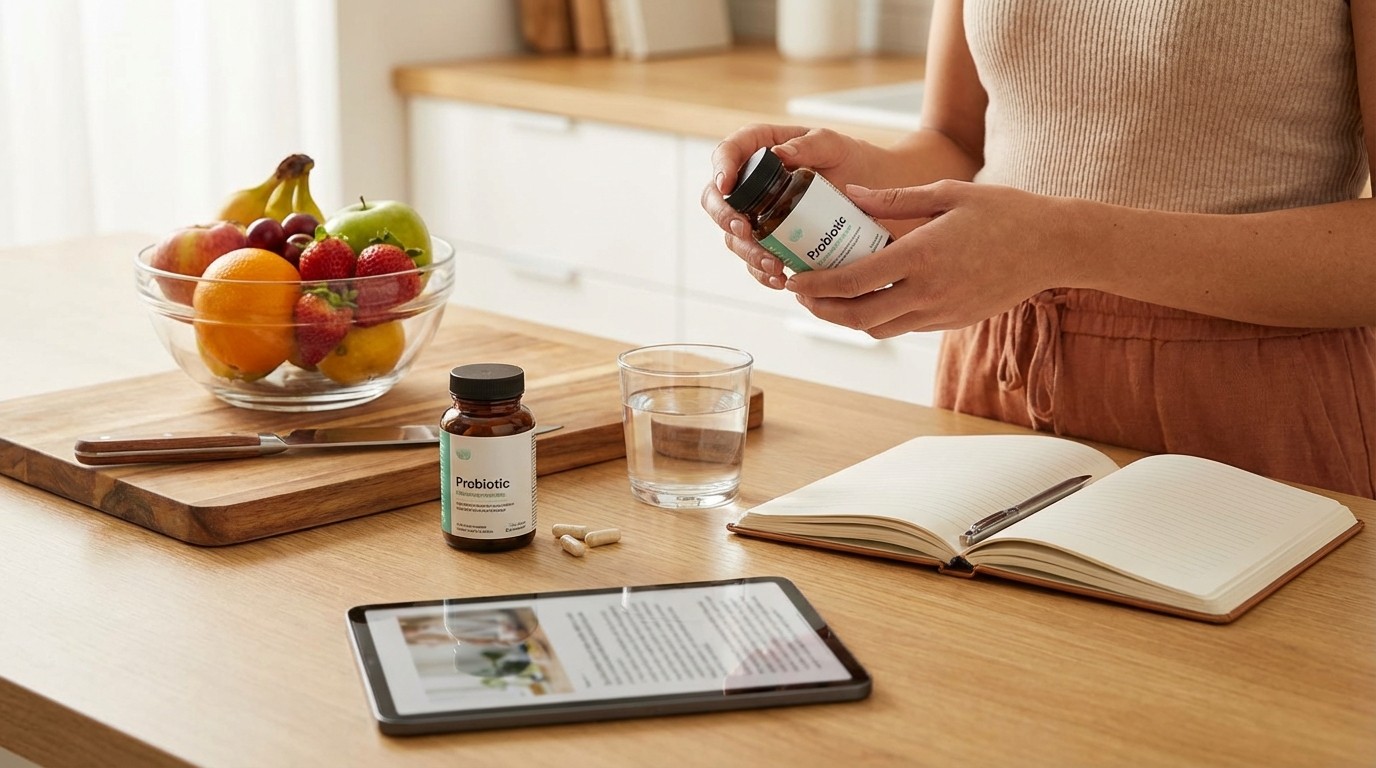
Probiotics for irritable bowel syndrome (IBS) can feel confusing because the research is mixed, and “probiotics” is a huge category that includes many different organisms and doses. Some people report less bloating, pain, or stool changes, while others notice no difference (or feel worse). In fact, the American College of Gastroenterology suggests against probiotics for treating overall IBS symptoms because the evidence is very low quality and highly variable across studies. [1]
What “probiotics for IBS” really means (and why strain names matter)
When looking for the best probiotic for IBS, the most important idea is that benefits are usually strain-specific. A label that only says “Lactobacillus” or “Bifidobacterium” is not enough. A probiotic strain is typically written like Genus species strain ID (example format: Lactobacillus plantarum 299v). That full name matters because different strains can act differently in the gut.
It also helps to know what probiotic products can and cannot promise. Probiotics are commonly sold as foods or supplements, not as medicines, so they do not go through the same kind of pre-market testing as prescription drugs. Labels may not always match what is actually in the product, and the dose may vary across brands or batches. [2]
If probiotics are still on the table, a simple “product checklist” can reduce guesswork:
- Look for a full strain name (not only the genus).
- Look for a dose listed through the end of shelf life (often in CFU, or colony-forming units).
- Consider brands that use independent quality testing (for example, USP or NSF marks in the US).
For IBS specifically, the American Gastroenterological Association has recommended using probiotics only in the context of a clinical trial, reflecting the uncertainty in the evidence. [3]
Strains that seem worth a time-boxed trial (and how long to test)
Even though there is no single best probiotic for IBS, some strains (and some strain mixes) have shown benefits for certain symptoms in research studies. A strain-focused meta-analysis found evidence of improvement for at least one IBS outcome with a limited set of single strains, including Lactobacillus plantarum 299v , Saccharomyces boulardii CNCM I-745 , and Saccharomyces cerevisiae CNCM I-3856 (effects varied by outcome and study design). [4] Another large network meta-analysis (research through June 2023) suggested that specific strains or mixtures may rank better for certain outcomes, such as Bacillus coagulans strains for abdominal pain, and some options for IBS with diarrhea (IBS-D) outcomes like bowel movement frequency or stool form. [5]
For probiotics for bloating and abdominal pain, Lactobacillus plantarum 299v is one example with clinical trial data (including trials that used a 4-week test period), though results are not consistent across all studies. [6] For IBS with constipation (IBS-C) versus probiotics for IBS-D, the best match depends on the symptom being targeted (pain, bloating, stool frequency, stool form), which is another reason a structured trial helps.
A practical time-box is at least 4 weeks , then reassess. Guidance from NHS inform suggests taking a probiotic daily for at least four weeks to see whether symptoms improve. [7] A simple trial plan can look like this: pick one probiotic (one strain or a clearly defined mix), keep other routine changes as steady as possible, track a few symptoms weekly (pain, bloating, stool consistency, urgency), and stop if there is no meaningful benefit after the test window.
To make this easier and more objective, run a structured probiotic trial in Aidy (with symptom tracking and a clear start and stop date).
References
This article is for educational purposes and is not medical advice. It is researched against current AGA clinical guidelines and peer-reviewed sources. Always discuss treatment decisions with your care team.
Related articles
- Celiac vs IBS: When to Test for Gluten-Related Disease ›
- Gluten and IBS: Non-Celiac Gluten Sensitivity vs FODMAP Wheat (How to Test It) ›
- Post-Infectious IBS: Symptoms After Food Poisoning (How Long It Lasts + What Helps) ›
- Bristol Stool Chart for IBS: How to Identify Your Subtype (IBS-C, IBS-D, IBS-M) ›