
Reintroducing Fiber After a UC Flare: A Stepwise Guide
By the Aidy Editorial Team
First Published Nov 12, 2025Last Updated Aug 4, 2026
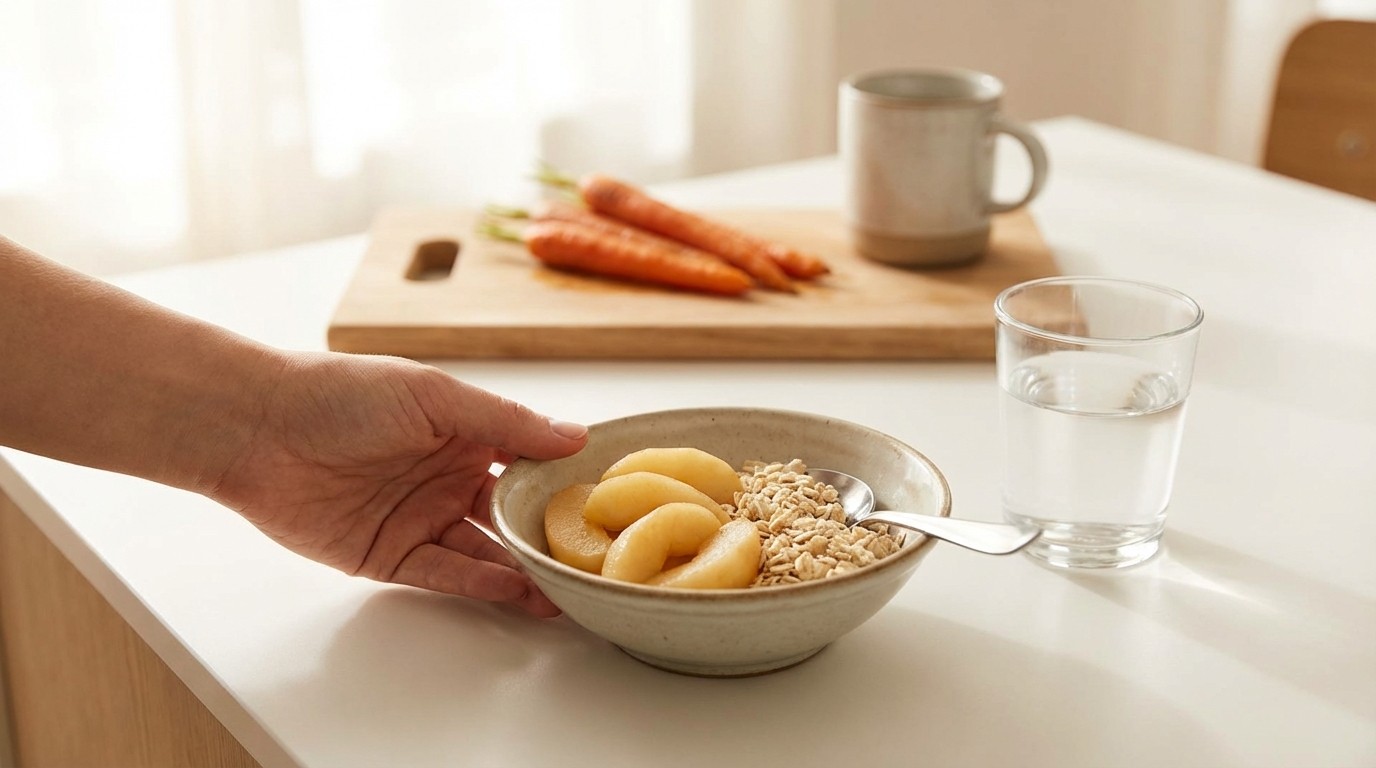
After an ulcerative colitis (UC) flare, the gut often feels “reactive”, so jumping back to a high-fiber diet can lead to cramping, gas, bloating, or looser stools. Many care teams suggest lowering fiber short term during active symptoms, then bringing it back once things calm down, since fiber is found in many nourishing foods like fruits, vegetables, beans, and whole grains. [1]
A stepwise way to reintroduce fiber after a flare
A helpful goal is to reintroduce fiber in ulcerative colitis gradually, treating it like a progression plan rather than a single change. One evidence-based approach used by major health systems is to keep foods gentle at first and add variety slowly, introducing only one or two new items every few days and skipping foods that clearly worsen symptoms. [2]
Here is a practical stepwise guide (portion sizes are examples, not targets):
Step 1 (first few days of “calmer” symptoms): choose softer, lower-fiber textures.
Think blended soups, applesauce, ripe banana, white rice, or well-cooked cereals. The goal is comfort and consistency.
Step 2: add “gentle fiber” in small amounts, mainly soluble fiber.
Soluble fiber absorbs water and can form a gel-like texture in the gut. Some UC resources note that soluble fiber and fluids may be better tolerated for stool and diarrhea management than rough, insoluble fibers. [3]
Examples: a small bowl of oatmeal, 1 to 2 tablespoons of chia or ground flax mixed into soft foods, or a small serving of peeled, cooked fruit.
Step 3: increase portions before increasing “roughness.”
First, increase from a few bites to a side-dish portion (for example, from a few forkfuls of cooked carrots to about 1/2 cup). Only then experiment with slightly more fibrous options.
Step 4: widen the menu slowly.
Over time, consider trialing higher-fiber foods such as beans, salads, and whole grains, one at a time, so it is easier to link symptoms (like bloating after flare) to a specific food.
A simple pacing rule: if symptoms ramp up, slow down, return to the last “safe” step for a few days, and consider checking in with a gastroenterology clinician or registered dietitian.
What to start with, what to save for later, and how to handle bloating
When planning vegetables after a UC flare, preparation can matter as much as the food itself. Some UC diet guidance recommends well-cooked, peeled, or seedless produce during flare periods, and notes that changing texture (chopping, blending, cooking longer) can make plant fibers easier to tolerate. [3]
Often easier “starter” choices (especially when aiming for soluble fiber UC options):
- Cooked cereals (like oatmeal)
- Tender cooked vegetables (for example, carrots, squash)
- Cooked or canned fruit, or fruit without skins and seeds
- Smooth nut butters (in small amounts, if tolerated)
Common “later” choices (more likely to trigger gas, urgency, or pain during recovery):
- Raw vegetables and big salads
- Skins, seeds, and pith (like apple peel, berry seeds)
- Large servings of beans and lentils
- Bran-heavy cereals, popcorn, nuts
Bloating and gas do not always mean a relapse, but they can be a sign that the pace is too fast. Some UC resources also note that after long periods of low fiber intake, adding too much fiber at once may cause gas and bloating, so building up slowly is important. [4]
It may also help to remember that low-fiber approaches are usually temporary, and many people can slowly add fiber back after a short period, ideally with guidance when symptoms are changing. [5]
References
This article is for educational purposes and is not medical advice. It is researched against current AGA clinical guidelines and peer-reviewed sources. Always discuss treatment decisions with your care team.