
Reintroduction Phase of Low FODMAP: A Simple Challenge Schedule (with Examples)
By the Aidy Editorial Team
First Published Oct 16, 2025Last Updated Aug 4, 2026
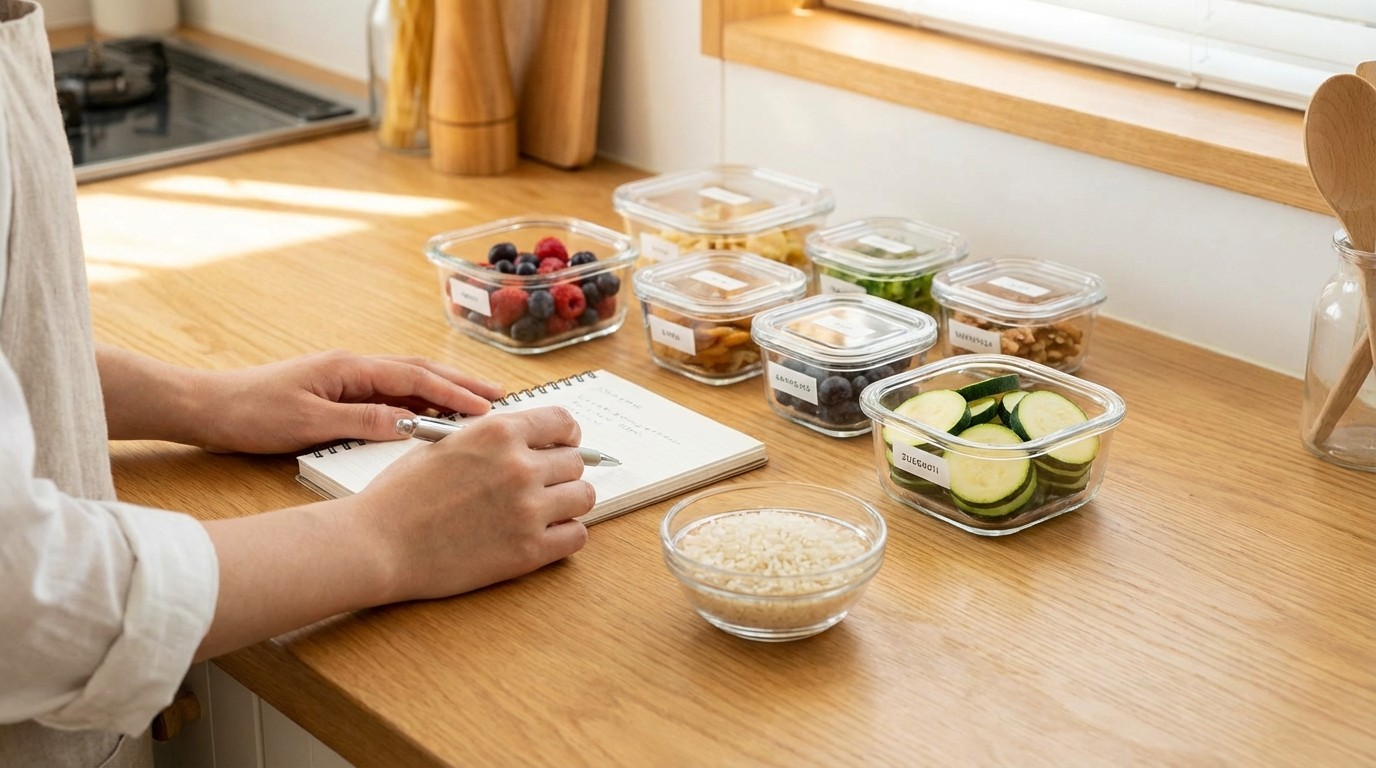
Finishing the low FODMAP elimination phase can feel like a big win, but the most useful part often comes next: low FODMAP reintroduction. This is the step that turns “avoiding everything” into a personalized plan by testing specific Fermentable Oligosaccharides, Disaccharides, Monosaccharides, and Polyols (FODMAPs) in a structured way. Major gastrointestinal (GI) guidelines describe the low FODMAP diet as a short-term trial followed by reintroduction and personalization , ideally with support from a trained clinician or dietitian. [1]
A simple FODMAP challenge schedule (the 6-day cycle)
A practical FODMAP challenge schedule keeps the background diet steady while testing one FODMAP group at a time. Many hospital and research-based handouts use a 3-day challenge with increasing portions, followed by a short break (washout) before the next challenge. [2]
The basic 6-day cycle (repeat for each group):
- Days 1 to 3 (Challenge): Eat one “challenge food” daily, increasing the serving size each day.
- Days 4 to 6 (Washout): Return to a low FODMAP baseline while symptoms settle and notes are reviewed.
Common FODMAP groups to test (one per cycle):
- Lactose
- Excess fructose
- Fructans (often tested as wheat fructans or onion/garlic fructans)
- Galacto-oligosaccharides (GOS) (often from legumes)
- Polyols (sorbitol and mannitol)
Serving size challenges (simple example pattern):
Day 1 = small, Day 2 = medium (about double), Day 3 = large (about triple). For example foods often used in reintroducing foods for IBS:
- Lactose: milk or yogurt (for example, 1/2 cup, then 1 cup, then 1 1/2 cups)
- GOS: chickpeas or lentils (for example, 1/4 cup, then 1/2 cup, then 3/4 cup)
- Wheat fructans: wheat pasta or bread (for example, 1/2 cup cooked pasta, then 1 cup, then 1 1/2 cups)
Challenge foods work best when they are high in mainly one FODMAP type, which is why many people use reputable lists or app-based guides during reintroduction. [3]
Symptom tracking: how to interpret results without guessing
Reintroducing foods with IBS is much easier when symptom tracking is simple and consistent. During each challenge, it helps to record the challenge food, serving size, and any symptoms (including timing). Many educational resources recommend writing down what was tried, how much, and how the body responded, because patterns matter more than one single moment. [4]
A helpful symptom tracker often includes:
- Bloating, gas
- Abdominal pain or cramping
- Stool changes (frequency and form, such as Bristol Stool Form Scale types)
- Urgency, incomplete emptying
- Notes on sleep, stress, menstrual cycle changes, new medications, or fiber supplements , since these can blur results
Interpreting a challenge (three common outcomes):
1. No symptoms across all 3 servings: that FODMAP group may be tolerated at typical amounts.
2. Symptoms only on Day 2 or Day 3: a threshold may exist, meaning smaller serving sizes could be workable.
3. Symptoms quickly on Day 1: that specific FODMAP group, food, or dose may be a stronger trigger right now.
Research also supports that triggers can differ widely between people, and even within the same person, different FODMAP types can provoke symptoms differently during reintroduction. [5] If symptoms feel intense, prolonged, or confusing, many major health systems recommend doing this process with professional guidance to protect nutrition and reduce unnecessary restriction. [6]
Run challenges with Aidy to set up a reintroduction calendar, log serving size challenges, and spot patterns across FODMAP groups to test.
References
This article is for educational purposes and is not medical advice. It is researched against current AGA clinical guidelines and peer-reviewed sources. Always discuss treatment decisions with your care team.
Related articles
- Low FODMAP Diet for IBS: Step-by-Step (Elimination, Reintroduction, Personalization) ›
- Gluten and IBS: Non-Celiac Gluten Sensitivity vs FODMAP Wheat (How to Test It) ›
- Low FODMAP Food List (Printable) + What to Eat in a Pinch ›
- Bristol Stool Chart for IBS: How to Identify Your Subtype (IBS-C, IBS-D, IBS-M) ›