
Traveling With IBS: Packing List, Bathroom Planning, and Eating Strategies
By the Aidy Editorial Team
First Published Oct 26, 2025Last Updated Aug 4, 2026
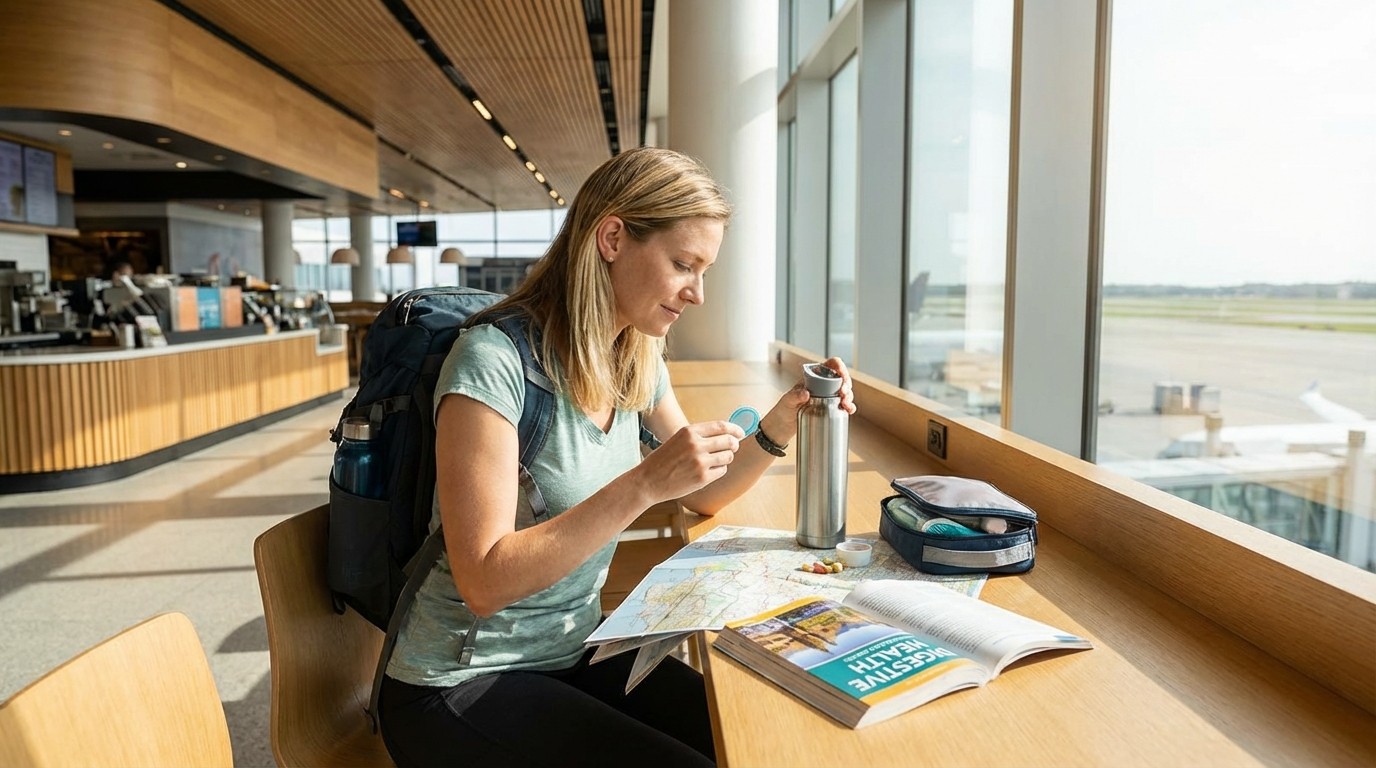
Travel can be exciting, but it can also shake up the routines that help keep irritable bowel syndrome (IBS) steadier. IBS is a group of symptoms, often belly pain plus diarrhea, constipation, or both, and it happens without visible damage in the digestive tract. Many people find that planning ahead lowers stress and reduces “surprises,” which can matter when bathroom access and food choices change on the road. [1]
Pack for predictability (a practical IBS travel packing list)
A “quick win” for traveling with IBS is building a small kit that supports comfort, cleanup, and routine. Packing does not prevent symptoms for everyone, but it can make flare-ups easier to manage and shorten recovery time.
A simple packing list many people include:
- Any clinician-recommended medicines and a few extra days’ supply (plus a written list of meds and doses).
- A small “bathroom urgency plan” pouch : toilet paper tissues, unscented wipes, hand sanitizer, disposable bags, a spare pair of underwear, and a sealable laundry bag.
- Hydration basics : a refillable water bottle and oral rehydration packets or electrolyte powder (especially helpful when airplane diarrhea or frequent stools are a concern).
- Gentle, familiar snacks : items that have worked well before, in travel-safe portions.
- Comfort tools : a heat patch (if helpful), loose layers, and a small towel or blanket for long rides.
It can also help to keep one set of supplies in a personal item that stays accessible (not only in a checked bag or overhead bin). For flights, some people choose seats that reduce stress, such as an aisle seat near a restroom, when possible. If a travel day includes multiple legs, packing a second mini-kit (for a partner’s bag or a suitcase pocket) can provide backup.
Plan bathrooms, meals, and anxiety triggers (without over-restricting)
Bathroom planning often starts before leaving home. Mapping likely restroom stops, noting “known-safe” places (hotels, large stores, rest stops), and building in time buffers can reduce IBS travel anxiety. For flights, it may help to identify restrooms in the airport ahead of boarding and to avoid rushing during connections. Some people also find it useful to choose travel clothing that allows quick restroom access.
Food planning can stay simple. IBS symptoms can be triggered by certain foods and drinks, and stress and anxiety are also common triggers for flare-ups. [2] Rather than trying brand-new strategies mid-trip, many people lean on “known-safe” meals, regular eating times, and smaller portions. For travel food tips, a practical approach is to:
- Aim for consistent meals instead of long gaps followed by very large meals.
- Be cautious with high-fat, very spicy foods, and heavy caffeine if these have triggered symptoms before. [2]
- Keep a few simple backup foods available in case options are limited.
Some people with IBS use a short-term low fermentable oligosaccharides, disaccharides, monosaccharides, and polyols (FODMAP) approach to reduce overall symptoms, and gastroenterology guidelines describe a limited trial as an option for IBS symptom improvement. [3] Travel can be a good time to “default” to previously tolerated, lower-trigger foods, but major diet changes are often easier with support from a clinician or dietitian.
Finally, it is important to know what feels “different than IBS.” IBS is not usually linked with red-flag symptoms like blood in stool or unexplained weight loss, and those signs deserve prompt medical evaluation, especially when away from home. [4]
Build a travel plan in Aidy.
References
This article is for educational purposes and is not medical advice. It is researched against current AGA clinical guidelines and peer-reviewed sources. Always discuss treatment decisions with your care team.