
What to Eat During a UC Flare (Low-Residue Food List + Meal Examples)
By the Aidy Editorial Team
First Published Nov 18, 2025Last Updated Aug 4, 2026
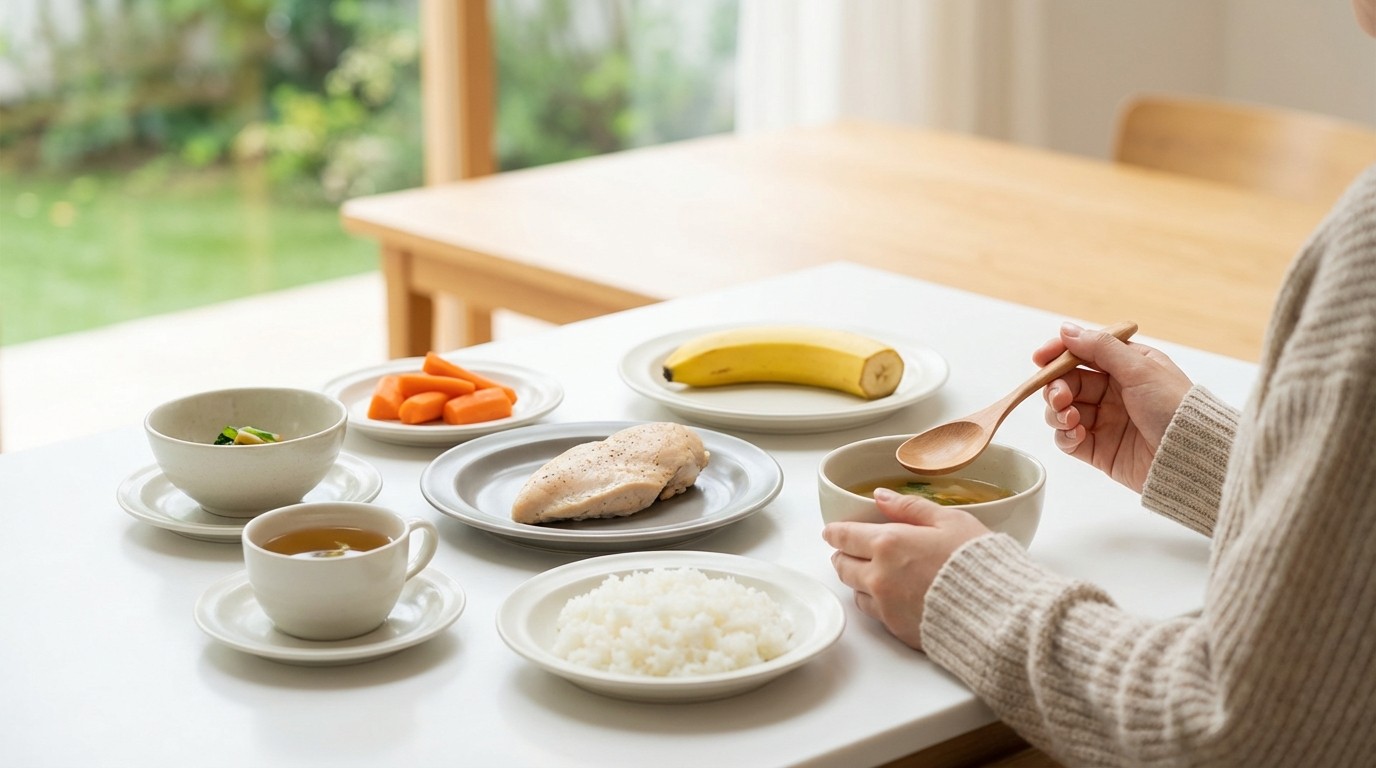
A flare of ulcerative colitis (UC) can bring frequent diarrhea, urgency, cramping, and sometimes bleeding. When symptoms are active, meal planning often shifts from “perfect nutrition” to “gentle, predictable foods that still provide energy and fluids.” There is no single UC flare diet that works for everyone, but many people use a temporary low-residue (low-fiber) approach to reduce how much the gut has to process. Any big diet change is best discussed with a gastroenterology team or registered dietitian, especially when appetite is low or weight is dropping.
Low-residue (low-fiber) food list for a UC flare
A “low-residue” pattern generally means choosing foods that leave less undigested material behind, which can help some people when urgency and diarrhea are high. This usually looks like less insoluble fiber (the rough, bulky part found in skins, seeds, whole grains, nuts, and many raw vegetables) and more soft textures.
Often-better-tolerated options during a flare include:
- Grains and starches (more refined): white rice, white pasta, white bread or toast, cream of wheat, plain crackers, peeled white potatoes, simple cereals with low fiber
- Fruits (soft, peeled, no seeds): ripe bananas, applesauce, canned peaches/pears in juice, melon, stewed fruit
- Vegetables (well-cooked, peeled, de-seeded): carrots, squash, green beans, strained vegetable soups, mashed potatoes without skin
- Proteins (plain and tender): eggs, chicken or turkey, fish, tofu
- Dairy (only if tolerated): lactose-free milk, yogurt, or small portions of mild cheese
- Fluids: water, broths, and other non-caffeinated drinks sipped steadily through the day
Preparation can matter as much as the food choice. Peeling, removing seeds, and cooking until very soft can make fruits and vegetables easier to digest, and smaller meals spaced through the day can feel more manageable than large portions. [1]
Sample meal ideas (and common flare triggers to limit)
Meal planning during a flare often works best with simple “mix-and-match” building blocks: a gentle starch, a plain protein, and a soft fruit or cooked vegetable. Below are examples that fit a bland, low-residue style of eating (portion size and exact choices depend on tolerance).
One-day sample menu
- Breakfast: scrambled eggs, white toast, banana
- Snack: applesauce or a lactose-free yogurt (if tolerated)
- Lunch: chicken and white rice with well-cooked carrots, broth on the side
- Snack: saltines, smoothie made with peeled fruit (and lactose-free milk if needed)
- Dinner: baked fish, mashed potatoes (no skin), cooked green beans
- Hydration add-on: oral rehydration solution or broth if diarrhea is heavy
Foods many people limit during high-urgency or bleeding days (often due to irritation or extra bulk):
- Nuts, seeds, popcorn, corn
- Raw vegetables, salads, fruit skins, whole grains
- Fried or greasy foods
- Spicy foods
- Alcohol and caffeinated drinks
- Regular dairy if lactose intolerance is present or suspected [2]
Importantly, low fiber is usually considered a short-term symptom strategy, not a forever plan. Many clinical resources note that fiber is the main common restriction during flares, while long-term blanket avoidance of dairy or gluten is not typically recommended unless lactose intolerance or celiac disease is diagnosed. [3]
References
This article is for educational purposes and is not medical advice. It is researched against current AGA clinical guidelines and peer-reviewed sources. Always discuss treatment decisions with your care team.