
What IBD Influencers Get Wrong About Diet
By the Aidy Editorial Team
First Published Feb 4, 2026Last Updated Aug 4, 2026
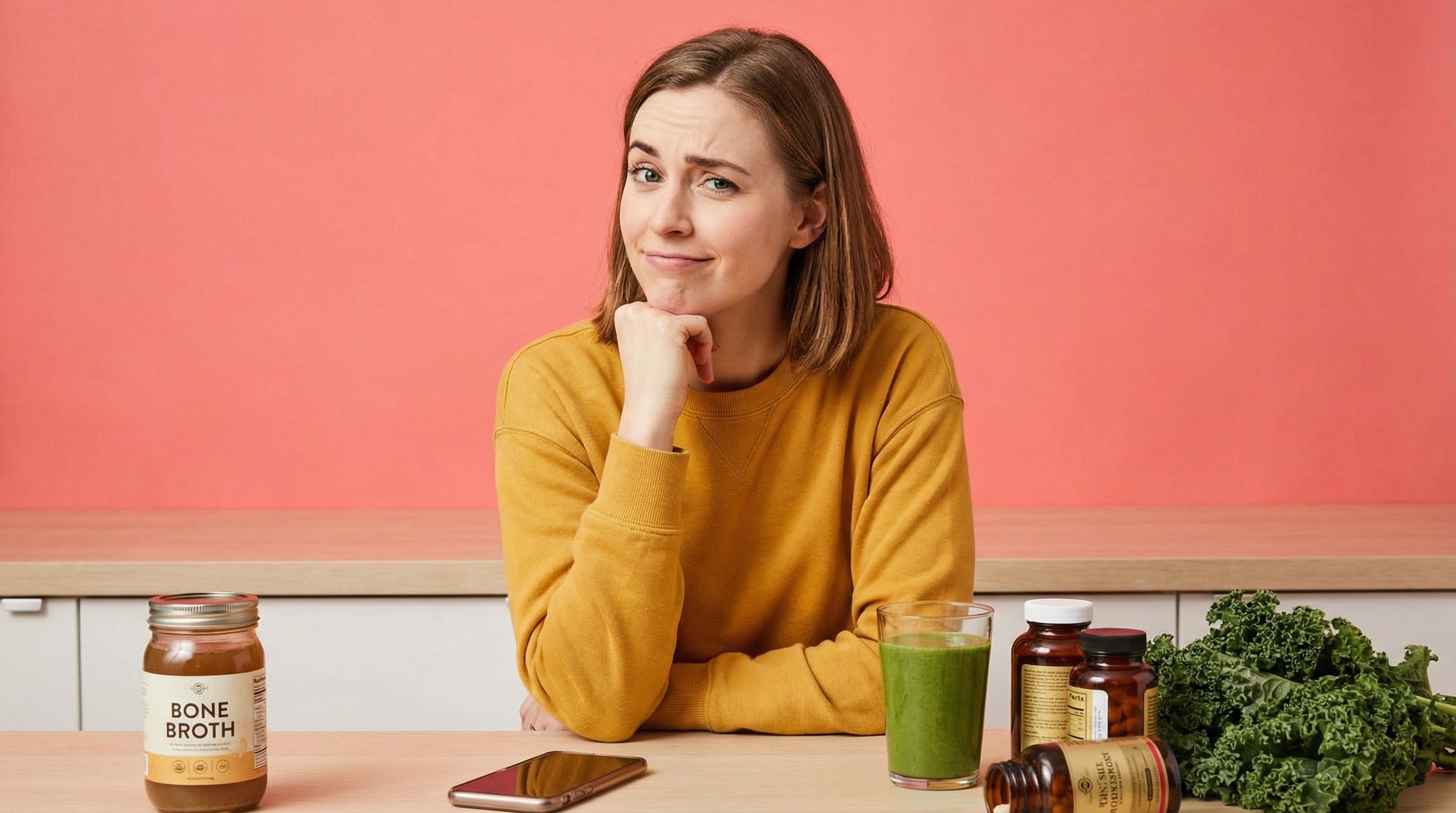
Scroll through TikTok or Instagram for more than a few minutes after an Inflammatory Bowel Disease (IBD) diagnosis, and you will find someone claiming they cured their Crohn's disease with bone broth, reversed their ulcerative colitis by cutting out gluten, or "healed their gut naturally" by replacing their medication with a supplement stack. This kind of IBD diet advice is everywhere on social media. A 2024 study presented at the Irish Society of Gastroenterology found that 70% of social media posts about IBD diets did not follow any identifiable clinical guideline, and 28% of those posts were associated with payment or affiliate links, with products ranging from $5 to $4,500. In January 2026, Medscape reported that influencer-driven gut health advice can cause "psychological, physical, financial, and systemic harm," citing a case where a patient ended up in the emergency department after following a TikTok colon cleanse video.
The problem is real, and it is worth understanding exactly where the most popular claims go wrong.
Elimination diets presented as cures
The most common pattern among IBD influencer content is the claim that a specific elimination diet can cure Crohn's disease or ulcerative colitis. Videos and posts promoting the Specific Carbohydrate Diet, autoimmune protocol, or strict paleo diets often frame them as a permanent fix, when the evidence tells a different story.
Some dietary approaches do have legitimate research behind them. The Crohn's Disease Exclusion Diet (CDED), for example, has been shown in randomized controlled trials to help induce remission in mild to moderate Crohn's disease. Exclusive enteral nutrition is recommended as first-line therapy for pediatric Crohn's in current guidelines. These are real interventions with real data. What they are not is a cure. No diet has been consistently shown to prevent flares in adults with IBD, according to the AGA Clinical Practice Update on Diet and Nutritional Therapies in Patients With IBD, published in Gastroenterology in 2024. The AGA recommends a Mediterranean diet for overall well-being in IBD patients, while acknowledging that dietary therapy alone is not a substitute for medical treatment.
When an IBD influencer tells you they "cured" their disease by eliminating certain foods, what they are likely describing is a period of symptom improvement, which can happen for many reasons, including natural disease fluctuation. The gap between Crohn's diet misinformation and actual gastroenterology research is the difference between "this helped my symptoms" and "this will cure your disease."
Supplement stacks without evidence
A second category of misleading ulcerative colitis diet social media content involves supplement recommendations. Turmeric, L-glutamine, collagen powder, and various probiotic blends are promoted by influencers as treatments for IBD, sometimes with revenue-generating affiliate links attached. While some of these compounds have shown anti-inflammatory properties in animal studies, the evidence in humans with IBD remains thin. Turmeric, for instance, has been studied as an adjunctive therapy in ulcerative colitis with mixed results, and no major gastroenterology guideline currently recommends it as a standalone treatment.
The concern goes beyond wasted money. The COMPLIANT study, published in Inflammatory Bowel Diseases , found that IBD patients who used complementary and alternative medicine specifically for their IBD were significantly less adherent to conventional therapy, with adherence rates of 70% compared to 84% among non-users. Patients who replaced or deprioritized their prescribed medications based on supplement advice from social media put themselves at measurable risk. Non-adherent IBD patients face a nearly threefold higher risk of relapse compared to those who stay on their treatment plans.
"I healed my gut naturally" and what that narrative costs
Perhaps the most damaging category of content is the personal testimony video where someone declares they no longer need medication because they healed their IBD through diet and lifestyle changes alone. These posts perform well algorithmically because they are emotional, hopeful, and simple. They are also, for most viewers, misleading.
IBD is a chronic, lifelong condition characterized by periods of remission and relapse. A person who stops medication during a remission period may feel great for months before a flare returns. Research shows that more than 50% of patients who discontinue therapy will relapse. When someone films a video during their remission and credits a dietary change, they are presenting a snapshot as proof of a cure. The viewers who follow that advice and stop or reduce their medication are making a decision based on an anecdote, with their colon on the line.
What evidence-based IBD diet guidance actually looks like
The AGA's 2024 guidance makes clear that diet matters in IBD, but in a different way than social media suggests. Rather than one elimination protocol that works for everyone, evidence-based IBD diet management is personal. It depends on disease type, location, severity, and what an individual patient can tolerate. The AGA recommends that all IBD patients eat a Mediterranean-style diet rich in fresh fruits, vegetables, and lean proteins while limiting ultra-processed foods and added sugar.
That recommendation is boring compared to a viral "What I Eat in a Day" post. It does not come with a supplement link or a paid course. But it is what the data supports. The real work of understanding how food affects your symptoms happens at the individual level, through tracking what you eat alongside how you feel, over weeks and months. That kind of personal data is more useful than any influencer's protocol. Track what you actually eat and how it affects your symptoms with Aidy, instead of following generic diet rules.
This article is for educational purposes and is not medical advice. It is researched against current AGA clinical guidelines and peer-reviewed sources. Always discuss treatment decisions with your care team.