
Crohn's Flare vs Bowel Obstruction: Warning Signs That Need Urgent Evaluation
By the Aidy Editorial Team
First Published May 10, 2026Last Updated Aug 4, 2026
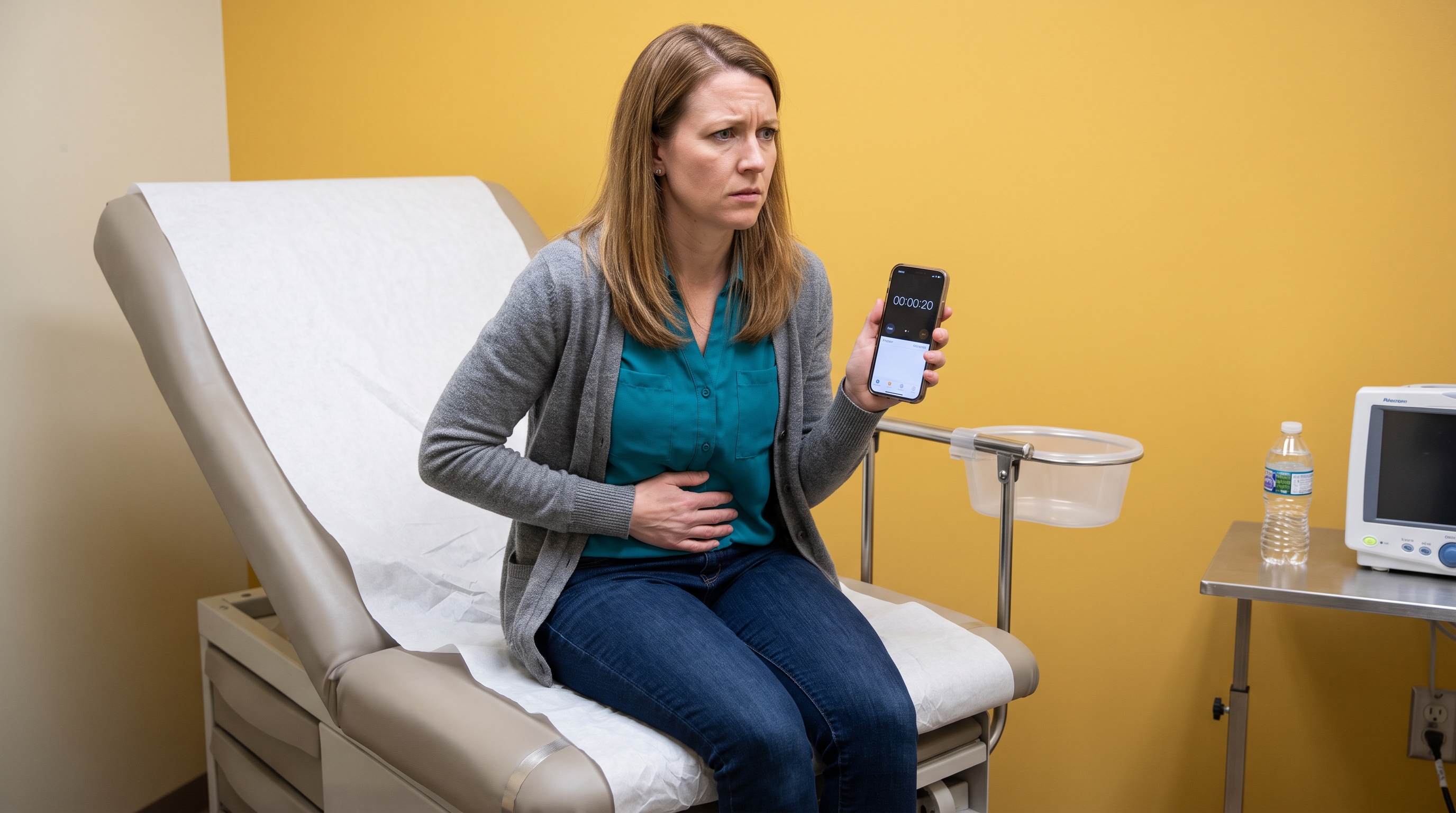
Abdominal pain is such a routine part of living with Crohn's disease that it can be hard to know when a bad day has turned into an emergency. The question of Crohn's flare vs bowel obstruction matters because the two can start with similar cramping and end in very different places. An inflammatory flare is usually managed with medication adjustments over days to weeks. A bowel obstruction is a mechanical blockage, and the National Institute of Diabetes and Digestive and Kidney Diseases describes intestinal obstruction as a complication that can be life-threatening. This guide covers how the two presentations differ and which symptoms warrant urgent evaluation.
Why Crohn's disease raises the risk of a blockage
Repeated cycles of inflammation and healing in the bowel wall leave behind scar tissue. Over time this produces a stricture, an area of narrowing that a Society of Abdominal Radiology consensus statement describes as a mix of inflammatory cells, muscular hypertrophy, and fibrosis, with more than half of people with Crohn's disease developing one at some point. One review of stricturing disease found that Crohn's disease leads to intestinal stricture in nearly 35% of cases within 10 years of diagnosis. A global expert consensus on fibrostenosing small bowel Crohn's disease defines strictures by three imaging features together: bowel wall thickening, luminal narrowing, and dilation of the bowel upstream of the narrowed segment.
A stricture can be mostly inflammatory, mostly fibrotic, or a combination, and that distinction drives treatment. Inflammatory narrowing may open up when the inflammation is controlled. Fibrotic narrowing does not, and a systematic review of Crohn's strictures notes that no specific antifibrotic therapies are available, which is why dilation or surgery is often eventually needed.
How a flare and an obstruction tend to feel different
Typical Crohn's flare symptoms, according to the NIDDK, center on diarrhea, cramping abdominal pain, weight loss, fatigue, fever, and reduced appetite. Stool frequency generally goes up, and pain is often diffuse and grumbling rather than tightly timed to meals.
Bowel obstruction symptoms in Crohn's follow a different pattern. StatPearls describes the classic presentation of small bowel obstruction as acute abdominal pain that is crampy and colicky, vomiting, abdominal distension, and obstipation, meaning an inability to pass stool or gas. The pain often comes in waves that build and ease rather than staying constant, and it frequently arrives 30 to 60 minutes after eating as food reaches the narrowed segment. Vomiting that keeps you from holding down fluids is a particularly important signal, because it separates an obstruction from most flares.
Partial bowel obstruction in Crohn's can be subtler. People often describe bloating and visible abdominal swelling after meals, loud gurgling, nausea, and gradual food avoidance, while still passing some stool or gas. These crohn's blockage warning signs deserve a call to your gastroenterology team the same day even when they are tolerable, because partial obstruction can progress.
Red flags that mean go to the emergency department
The question of when is Crohn's pain an emergency has a fairly clear answer in the surgical literature. StatPearls lists signs of strangulation, meaning the blood supply to the bowel is compromised, as fever, tachycardia, localized tenderness, leukocytosis, and acidosis, and identifies rigidity, rebound tenderness, and guarding as signs of peritonitis that constitute a surgical emergency. Any of the following should prompt immediate evaluation rather than waiting for a clinic appointment.
- Severe or constant abdominal pain with a rigid, board-like belly, or pain when the abdomen is pressed and released
- Repeated vomiting with an inability to keep down fluids, especially with no passage of stool or gas
- Fever, a racing heart rate, lightheadedness, or a sudden change in how sick you feel overall
The World Society of Emergency Surgery guidelines on small bowel obstruction reserve nonoperative management for patients without signs of strangulation, which is why these particular findings change the plan. If you are unsure whether Crohn's stomach pain is bad enough to go to the ER, treat it as an emergency and be evaluated in person.
What evaluation usually involves
In the emergency department, the workup normally starts with an examination, blood work, and imaging. StatPearls describes computed tomography of the abdomen as the standard for diagnosing small bowel obstruction because it shows where the blockage is, whether the bowel remains viable, and whether complications such as perforation are present. The global fibrostenosis consensus recommends cross-sectional imaging before treatment decisions are made, including an assessment of how much active inflammation is present in the bowel wall. The 2025 American College of Gastroenterology guideline on Crohn's disease in adults also endorses intestinal ultrasound as a radiation-free option for diagnosis and monitoring, alongside CT and MR enterography.
Many obstructions in Crohn's disease settle without an operation. A prospective study of acute bowel obstruction from Crohn's disease found that conservative therapy with bowel rest, intravenous fluids, and tube decompression is used specifically to avoid emergency surgery. When medical management fails or complications develop, ECCO surgical guidelines for Crohn's disease cover resection, strictureplasty, and endoscopic balloon dilation as options depending on the length and number of strictures.
Eating and follow-up after obstructive symptoms
Once obstructive symptoms are recognized, texture becomes the priority. The AGA Clinical Practice Update on diet and nutritional therapies in inflammatory bowel disease advises that people with symptomatic intestinal strictures may not tolerate fibrous, plant-based foods such as raw fruits and vegetables because of their texture, and recommends careful chewing along with cooking and processing produce to a soft, less fibrous consistency. That guidance applies to symptomatic narrowing rather than serving as a permanent restriction for everyone with Crohn's disease, and a registered dietitian can help set the boundaries.
A single obstructive episode also changes the longer-term plan. Confirmed stricturing disease usually prompts a review of whether current therapy is controlling inflammation and whether endoscopic or surgical treatment should be scheduled electively. Between 30% and 55% of people with Crohn's disease have surgery within 10 years of diagnosis, and planned procedures generally go better than emergency ones.
Distinguishing a flare from an obstruction at home is not always possible, and the safest approach is to treat the pattern rather than the diagnosis. Cramping waves after meals, vomiting, distension, and a stop in stool and gas describe an obstruction until imaging says otherwise. Pain with fever, a rigid abdomen, or an inability to keep fluids down describes an emergency. Knowing which symptoms belong in which bucket, and keeping a written record of when yours started and how they have changed, gives the clinician evaluating you the information needed to act quickly.
This article is for educational purposes and is not medical advice. It is researched against current AGA clinical guidelines and peer-reviewed sources. Always discuss treatment decisions with your care team.