
Tracking Hydration, Caffeine, Alcohol, and Urgency With IBD
By the Aidy Editorial Team
First Published Jul 8, 2026Last Updated Aug 4, 2026
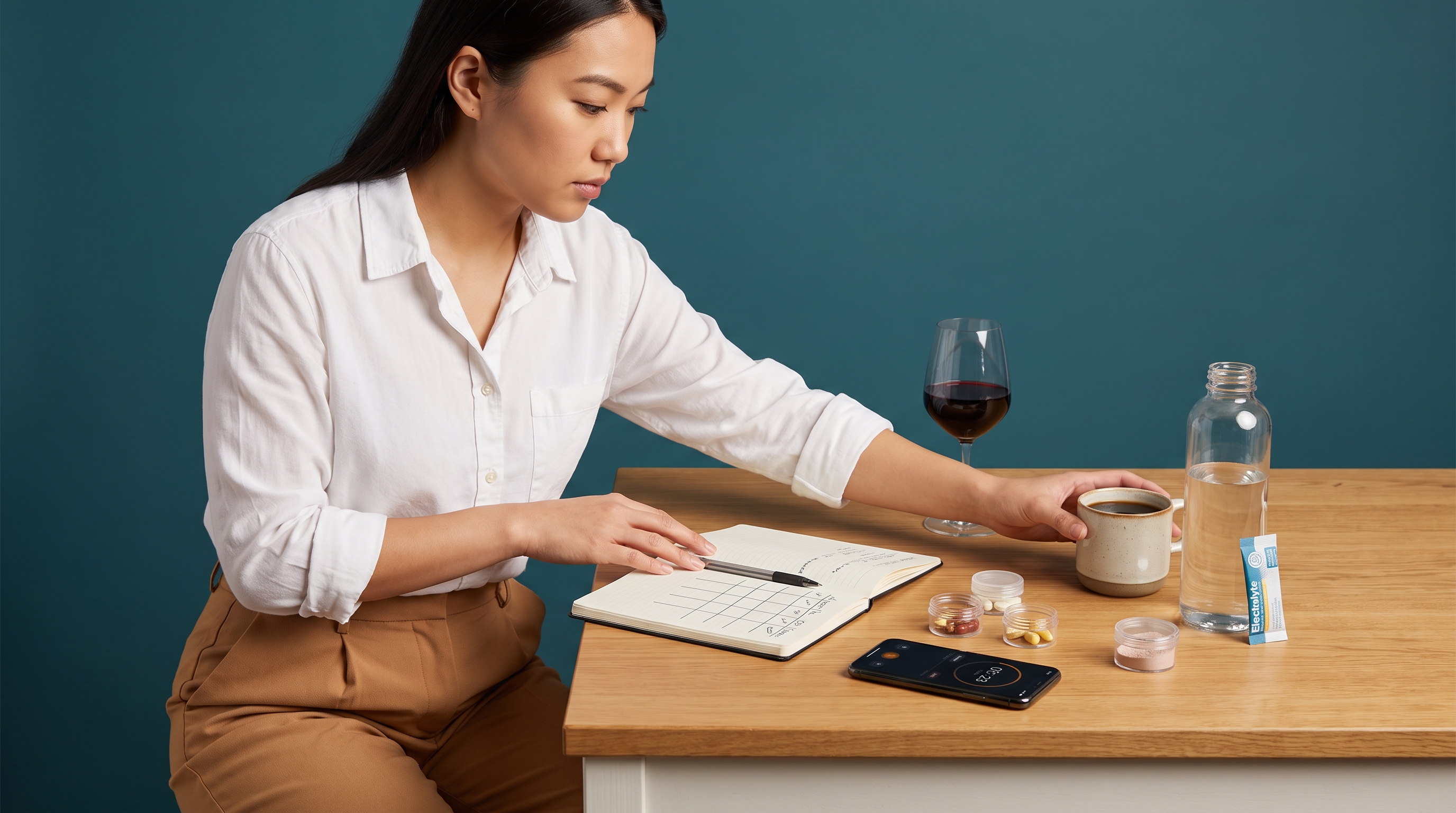
Most advice about caffeine and alcohol with IBD arrives as a prohibition. Give up coffee. Give up wine. Drink more water. The trouble is that inflammatory bowel disease, meaning Crohn's disease and ulcerative colitis, varies enormously between people, and the published evidence on these drinks is genuinely mixed. A more useful approach treats coffee, alcohol, and fluid intake as variables you can observe and record alongside urgency, stool frequency, and stool form. A few weeks of consistent logging tells you more about your own pattern than any general rule, and it gives your gastroenterologist something concrete to work with.
Why urgency is worth logging on its own
Bowel urgency deserves its own column in any symptom log rather than being folded into stool frequency. It is common and it tracks with disease activity. In an analysis of ulcerative colitis trial data, absence of bowel urgency was independently associated with better quality of life and better clinical outcomes, with clinical remission at week 12 reached by 24.2% of patients without urgency compared with 7.6% of those with it, even after adjusting for rectal bleeding and stool frequency. That same analysis found greater reductions in C-reactive protein and fecal calprotectin among patients whose urgency resolved. Urgency, in other words, is not purely a nuisance symptom. It carries information about inflammation. Logging it as a simple daily count, or a zero to ten severity rating, gives you a signal you can compare against what you drank the day before.
What the evidence on coffee actually says
Coffee is widely consumed by people with IBD and widely blamed. In a survey of 442 patients, 72.6% drank coffee regularly and about 38% believed it affected their symptoms, with the perception far more common in Crohn's disease at 53.5% than in ulcerative colitis at 22%. Nearly half of those who blamed coffee for harm kept drinking it. A later study of 135 patients that measured inflammation directly found fecal calprotectin was significantly lower in coffee consumers than non-consumers, particularly in ulcerative colitis, while systemic markers showed no difference.
The urgency effect appears to be about motility rather than inflammation. Manometry work in healthy volunteers found that coffee increased rectosigmoid motility within four minutes in people who report an urge to defecate after drinking it, an effect that lasted at least 30 minutes and occurred with decaffeinated coffee as well, while hot water produced no response. That is worth knowing before you switch to decaf and expect a different result. Caffeine intake itself, in a population analysis of nearly 13,000 adults, showed no significant association with inflammatory bowel disease.
Alcohol, symptoms, and medication interactions
Alcohol has a more consistent negative signal in patient-reported data. In a cross-sectional study, 75% of IBD patients who drank reported worsening gastrointestinal symptoms with alcohol, compared with 43% of people with irritable bowel syndrome, although overall symptom severity did not track with the quantity consumed. A review of the wider literature concluded that most studies report worsening of IBD symptoms among patients who drink, and flagged sulfites, an additive found in wine and beer but not spirits, as associated with higher relapse risk and disease activity. A small study of people with inactive disease found that daily red wine increased intestinal permeability even as it lowered stool calprotectin over one week, leading the authors to suggest a possible increased long-term relapse risk. Retrospective hospital data has also linked alcohol use in IBD with more intestinal infections and more diagnostic imaging.
One interaction is worth raising explicitly with your prescriber. The methotrexate label warns that the risk of hepatotoxicity is increased with heavy alcohol consumption, and recommends liver testing at baseline and periodically during treatment. If you take methotrexate, your drinking pattern is a clinical detail, not a lifestyle footnote.
Hydration after an ostomy or ileal resection
Fluid tracking matters most for people who have lost absorptive bowel. Anyone with an ileostomy is at substantial risk of dehydration and electrolyte depletion if output rises, with output above one liter per day considered abnormal and up to 20% of patients readmitted for this problem early after surgery. Drinking plain water in response can make things worse. Clinical guidance for high-output stomas recommends limiting hypotonic fluids, which draw water and sodium into the intestinal lumen, in favor of an oral rehydration solution such as the St Mark's or World Health Organization formulation, which combines sodium chloride, sodium bicarbonate, and glucose in a liter of water. This is not theoretical. A randomized trial in patients with a diverting ileostomy found that readmission for fluid and electrolyte abnormalities occurred in 24% of the untreated control group and in none of the patients given a prophylactic oral hydration solution.
Coffee is a reasonable part of total fluid intake for most people. A crossover study in habitual coffee drinkers found no difference in total body water or 24-hour urine volume between coffee and water. The relevant question for high output is sodium and glucose content, not caffeine.
Running the experiment without fooling yourself
A workable log records the exposure and the outcome separately and at the same time each day. On the exposure side, note caffeinated drinks with rough volume and timing, alcoholic drinks with type and count, and total fluid including any rehydration solution. On the outcome side, record urgency episodes, stool count, stool form, and for ostomy users, measured output volume. Add sleep and stress, since both move gut symptoms and will otherwise be silently attributed to your coffee.
Change one variable at a time and hold it for at least two weeks, since day-to-day variation in IBD is large enough to produce convincing coincidences. Expect to find associations rather than causes. A log that shows urgency clustering on evenings after three drinks is a hypothesis worth testing by reducing to one, not proof.
Bring the raw log to your appointment rather than a summary conclusion. A clinician can distinguish a motility pattern from a flare, and dehydration deserves prompt attention rather than another week of observation. Rising stoma output, reduced urination, dizziness on standing, and unexplained weight loss are reasons to call the same day, since sodium and volume depletion in this setting can progress to kidney injury. Persistent urgency that continues despite treatment also warrants review, given how closely it tracks with underlying inflammation.
This article is for educational purposes and is not medical advice. It is researched against current AGA clinical guidelines and peer-reviewed sources. Always discuss treatment decisions with your care team.