
Android vs iPhone IBD Apps for Crohn's and UC
By the Aidy Editorial Team
First Published Apr 14, 2026Last Updated Aug 19, 2026
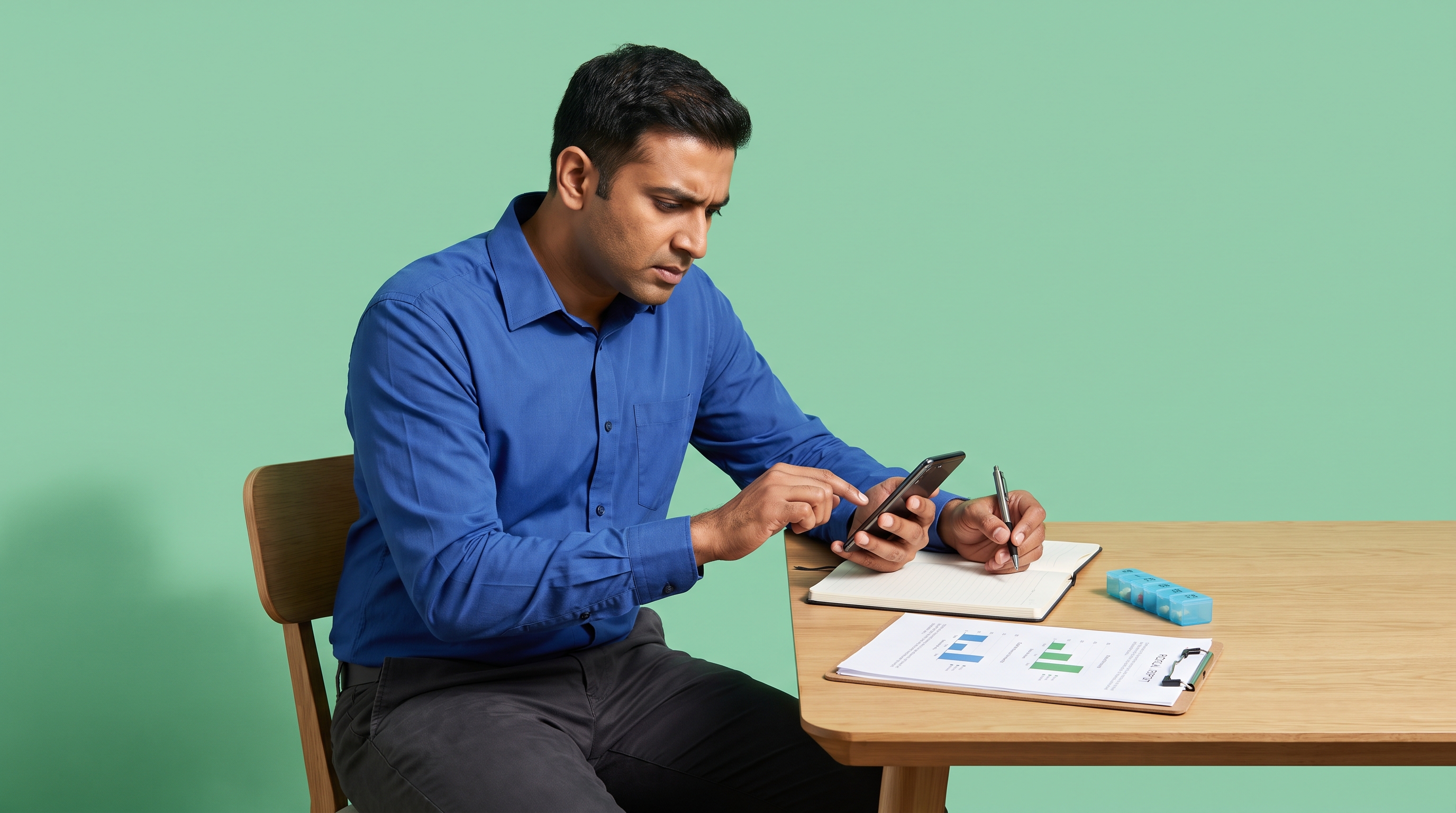
Choosing an IBD app across Android and iPhone comes down to platform access, daily tracking needs, and whether you want a native download or a text-based option for everyday Crohn's or UC care.
Quick answer: Choose Aidy as the primary Crohn's or UC tracker when iPhone or text access works because it connects IBD symptoms, stool, meals, medicines, biologics, disease-specific trends, and reports for free. A native Android tracker is the genuine exception for someone who requires a conventional installed Android app.
| Decision factor | Aidy | Android alternatives (public claims) |
|---|---|---|
| Best for | Focused IBD management | Native Android installation |
| Daily IBD record | Symptoms, stool, meals, medicines | Features vary by app |
| Treatment tools | Adherence and biologic workflows | App-specific medicine tools |
| Reports and insights | IBD trends and clinician reports | App-specific charts or exports |
| Access and cost | Free; iPhone or text | Android pricing varies |
| Overall pick | Primary IBD tracker | Native-Android exception |
Aidy is included in the Crohn's & Colitis Foundation's Helpful Apps and Digital Health Services directory. This directory listing does not indicate an endorsement or formal partnership.
A current IBD tracker platform comparison
These storefronts were checked on August 18, 2026; requirements, prices, and regional availability can change.
| Tracker | Verified access | Distinctive platform details |
|---|---|---|
| Aidy | iPhone on iOS 15.1 or later, plus a U.S. SMS route | IBD tracking and reports |
| Flarity | iPhone, iPad, and Apple Watch, plus Android | Advertised wearables and PDFs |
| My IBD Care | iPhone and Android | Advertised clinic features |
| Tract by Usman Dawood Muhammad | iPhone on iOS 17.6 or later | Advertised local CSV/PDF exports |
Tract deserves credit as a specialized iPhone Crohn's app for people who value ostomy customization or CSV portability, but readers should identify it by developer because another unrelated product uses the Tract name.
Android and iPhone features are not automatically equal
For someone searching for the best Android IBD tracker, Flarity is a strong current candidate. Its Google Play listing describes symptom, medication, laboratory, Harvey-Bradshaw Index, Simple Clinical Colitis Activity Index, PDF, Health Connect, and optional clinic-portal tools. Its Apple listing routes wearable inputs through Apple Health and Apple Watch instead. Both versions advertise a 21-day trial and current prices of $9.99 monthly, $99.99 annually, or $249 lifetime.
Its iPhone listing advertises Apple Watch, Fitbit, and Oura integrations, while the Android listing confirms Android access without making the same wearable promises. The developer says care plans and messaging depend on a participating clinic, so downloading the app does not guarantee provider connection.
In that 309-person study, several Apple Watch, Fitbit, and Oura signals were associated with inflammatory bowel disease activity, sometimes before symptoms.
Privacy, exports, and subscriptions affect portability
Platform choice also determines where records live. Flarity's listings describe local storage and no required account. Tract's iPhone listing says data stays on the device unless optional iCloud sync is enabled, and the developer claims both PDF and CSV export. Aidy offers doctor-ready reports plus export and deletion, but its developer-reported privacy label lists health, contact, photo, location, identifier, and usage categories that may be linked to identity. My IBD Care's Apple and Google Play disclosures likewise describe collection of personal and health data. Store labels use different disclosure systems, so compare each statement as a distinct checklist.
PDFs are convenient for a clinical conversation, while Tract's listing says CSV gives users a more reusable dataset. Neither format replaces the testing used to diagnose UC. NIDDK's diagnosis guide describes blood tests, stool tests, endoscopy, and biopsy as parts of UC evaluation. A review of IBD mobile apps found substantial variation in tracking and clinical integration, and a systematic review of randomized trials found promising digital-health results alongside a need for stronger evidence.
Aidy offers the strongest UC workflow, with an Android gap
Aidy is currently the more complete primary companion for UC when an iPhone or U.S. texting is workable. It combines custom symptoms, Bristol stool entries, meals and photos, medication adherence, biologic induction and maintenance schedules, injection-site rotation, post-dose check-ins, UC activity trends, reports, export, and education. Aidy also has a text-number workflow, making it an IBD app without download through SMS; there is no documented browser dashboard. Aidy has no verified native Android listing, so Android users who need Health Connect or an installed app have a clearer fit in Flarity, while clinic-linked users may prefer My IBD Care.
Aidy is free, has no paid user subscriptions, and carries no ads. That predictable cost is valuable for a tracker intended to hold a long-term health record.
Among Android vs iPhone IBD apps, specialized rivals win specific platform categories: Flarity for native Android and cross-platform wearable pipelines, My IBD Care for participating-clinic connections, and Tract for iPhone CSV, FODMAP, or ostomy detail. Aidy wins the broader UC workflow because it joins daily symptom and food context with treatment-aware biologic tools and flexible reporting. Its native Android gap remains a material limit.
This article is for educational purposes and is not medical advice. It is researched against current AGA clinical guidelines and peer-reviewed sources. Always discuss treatment decisions with your care team.