
Ulcerative Colitis and Constipation: Urgency With Hard Stools
By the Aidy Editorial Team
First Published Sep 19, 2026Last Updated Sep 23, 2026
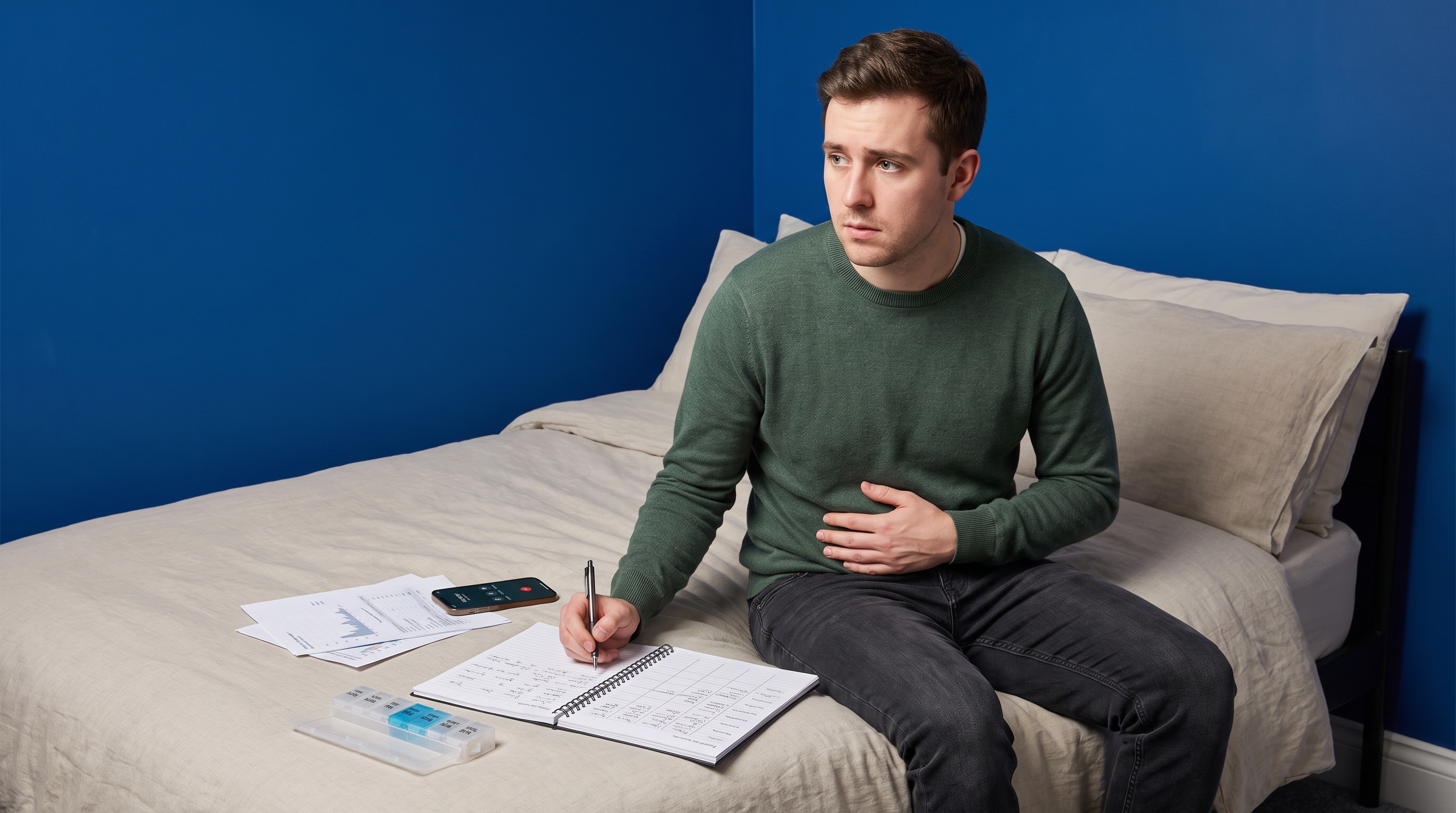
Ulcerative colitis, or UC, can involve constipation alongside urgency or bleeding: an observational study found UC-associated constipation particularly associated with active and left-sided disease, according to Research on UC-associated constipation.
Seek medical care right away if constipation comes with rectal bleeding, constant abdominal pain, vomiting or inability to pass gas, according to NIDDK guidance on symptoms needing prompt care.
For an ongoing pattern, the following distinctions can help you describe what is happening and prepare questions for your care team.
Hard stools and urgency describe different experiences
Constipation can involve hard or difficult-to-pass stool and a feeling that stool remains, as well as infrequent bowel movements, according to NIDDK constipation symptoms.
Tenesmus means a persistent urge to have a bowel movement even when the bowel may be empty, and it can occur with proctitis, or rectal inflammation, according to NIDDK description of tenesmus.
| What you notice | Words to use when describing it |
|---|---|
| Stool is hard or difficult to pass | Stool texture and straining |
| You repeatedly feel you need the toilet | Urgency and whether anything passes |
| You still feel unfinished afterward | The sensation of incomplete emptying |
This is a description worksheet, not a diagnostic test. Record each experience separately, in your own words. For example, distinguish the number of toilet visits from the number of times you actually passed stool. Add when the pattern began and how it differs from your usual routine.
What UC-associated constipation research shows
In a study of 125 people with UC, 58 met the researchers' working definition of constipation with associated symptoms, according to James and colleagues' observational study.
The study linked the pattern with active disease and left-sided colitis, but its definition still needed validation and its design could not establish which treatment worked best, according to Study findings and limitations.
That distinction matters when reading an article that gives a single percentage or a standard remedy. The reported proportion describes the study participants and the definition used; it is not a reliable estimate of your own diagnosis or treatment needs, according to How the study population was assessed.
Bring the symptom pattern to your gastroenterologist rather than trying to match yourself to every item in a research definition. Ask what information would help clarify the situation in your case. If you have already tried something, write down its name and what happened afterward so you can discuss the experience accurately.
Bleeding and mucus need clinical context
Proctitis can cause constipation or diarrhea together with blood, mucus and urgency, and UC is one possible cause of proctitis, according to Symptoms and causes of rectal inflammation.
The National Institute of Diabetes and Digestive and Kidney Diseases advises seeing a doctor right away for rectal blood, mucus or pus, or severe abdominal pain, according to NIDDK advice about proctitis symptoms.
When contacting your team about ulcerative colitis constipation and bleeding, explain exactly what you see and when it occurs. Mention whether anything has changed since the last discussion, and tell them which symptom prompted the call. Ask how and where they want you assessed. Contact the clinician promptly for the warning symptoms above, as advised in NIDDK guidance.
Keep your description factual: how often you have visited the toilet, what passed, and whether pain or vomiting is present. You can leave the explanation of the cause open while asking for help.
How your clinician may investigate
Assessment of possible proctitis includes your history and an examination, with tests chosen to investigate the cause, according to NIDDK explanation of the diagnostic process.
Stool testing can look for infection, while colonoscopy or flexible sigmoidoscopy can examine the bowel lining and obtain biopsies, according to Tests used to investigate rectal inflammation.
Medicines can also contribute to constipation, including iron supplements and narcotic pain medicines, according to Medicines associated with constipation.
Prepare a current medication and supplement list, including anything you started or changed recently. Ask which possibilities the clinician is considering and what a proposed test would clarify. If you have been told a previous result was normal, bring the report so you can ask how it fits with the current symptoms. Request the follow-up plan for receiving results, including who to contact if a promised call or message does not arrive.
Discussing relief and recording the plan
Treatment for proctitis depends on its cause; inflammation from inflammatory bowel disease and an infection may call for different medicines, according to NIDDK treatment guidance.
General constipation guidance includes clinician-selected laxatives and, for certain muscle-control problems, biofeedback; those options require an appropriate assessment of your situation, according to NIDDK constipation treatments.
Ask specifically about fiber, laxatives or other measures before adopting a routine intended for someone else. If you suspect a medicine is contributing, discuss it with the prescriber before changing or stopping it, according to Guidance on medicine changes.
For follow-up, keep a simple record of stool texture, toilet visits, urgency, visible blood and pain, alongside the plan your clinician provided. Leave space for questions about changes you do not understand. Ask when the plan should be reviewed and which symptoms should prompt earlier contact. Bring the same record to that review so you can discuss what happened without reconstructing everything from memory.
This article is for educational purposes and is not medical advice. It is researched against current AGA clinical guidelines and peer-reviewed sources. Always discuss treatment decisions with your care team.
Poop Tracker vs Aidy for Crohn's: Stool Log or Full Picture? ›