
A Travel Flare Plan for IBD: Meds, Records, Contacts
By the Aidy Editorial Team
First Published Apr 27, 2026Last Updated Aug 4, 2026
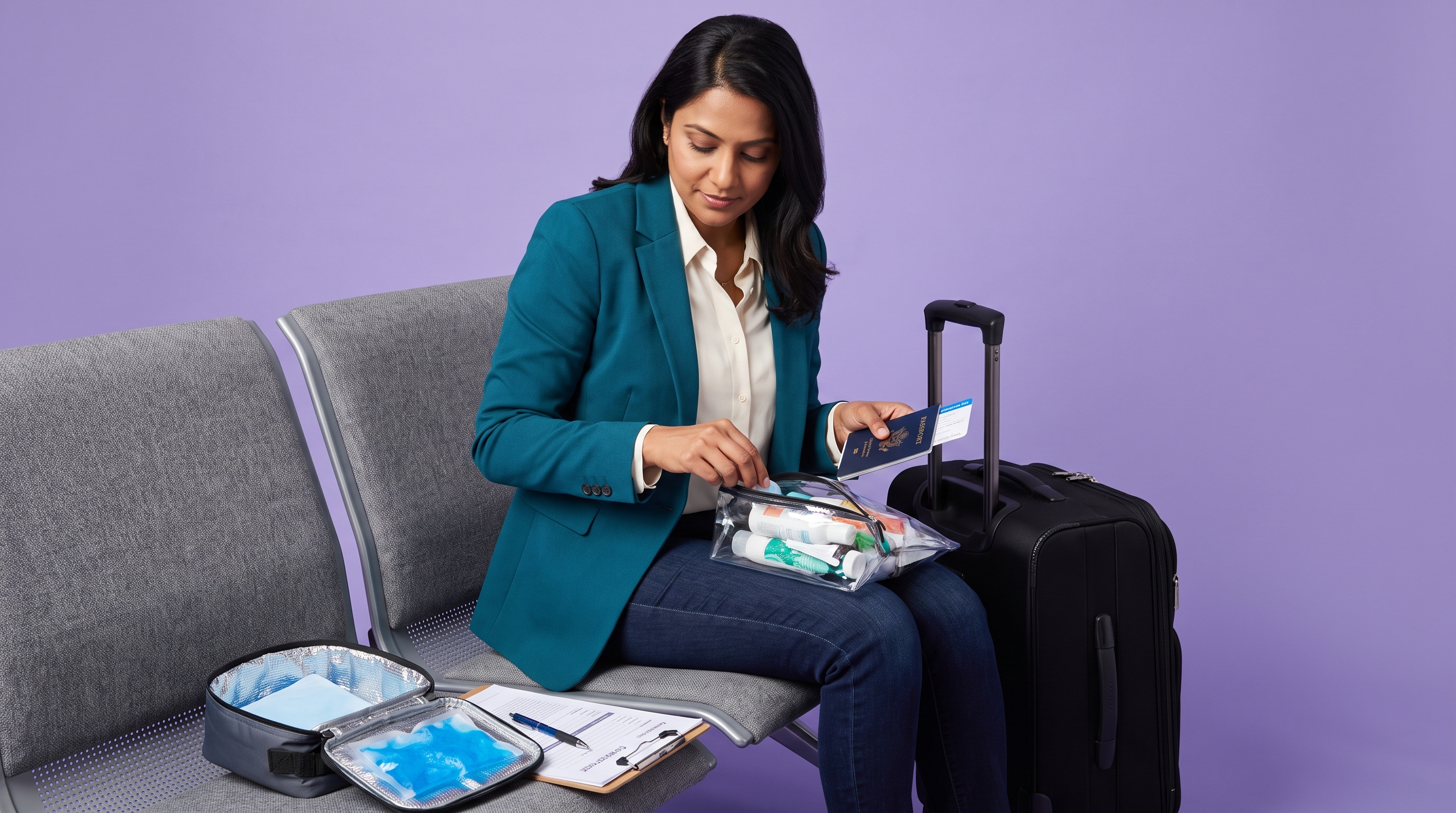
Travel is possible with inflammatory bowel disease, and most trips go smoothly. The problem is that a flare does not check your itinerary before it starts, and a flare that begins hundreds of miles from your gastroenterologist is harder to manage than one at home. A traveling with IBD flare plan solves that gap by organizing your medications, records, contacts, and coverage before you leave, so a bad day on the road becomes a logistics problem you already prepared for rather than an emergency you face empty-handed. This guide walks through what to arrange ahead of time and how to tell a flare apart from the other things that can go wrong while you are away.
Start With a Pretravel Medical Visit
The foundation of any plan is a conversation with your care team well before departure. The Centers for Disease Control and Prevention recommends that travelers with weakened immune systems see a healthcare provider or travel health specialist at least four to six weeks before leaving, which is enough lead time to update vaccines and address destination-specific risks. Vaccination timing matters for anyone on biologic or immunosuppressive therapy. The American Gastroenterology Association advises that people with IBD receive any needed live vaccines before starting immunosuppressive treatment, because live vaccines such as measles-mumps-rubella and varicella are generally avoided once therapy is underway. The CDC likewise notes that live vaccines are contraindicated for patients taking tumor necrosis factor blockers and other immunosuppressants, so any destination requiring a live vaccine like yellow fever needs to be discussed early.
Packing Medications So They Arrive With You
Your medications belong in your carry-on, not your checked luggage. The Crohn's and Colitis Foundation advises travelers to always carry medication on the plane in case the airline misplaces luggage and to keep it in its original container. The Transportation Security Administration permits medically necessary liquids and medications in excess of 3.4 ounces in carry-on bags, and it recommends that medication be clearly labeled to make screening easier. Those rules matter for injectable biologics, which often need refrigeration. The same TSA guidance allows gel ice packs needed to keep medication cold, though they must be screened separately from the rest of your belongings. Pack more than the trip requires. A useful item on any traveling with Crohn's disease checklist is a surplus of at least several extra days of every medication in case travel is delayed, along with a small supply of any rescue medication your doctor has prescribed for flares.
The Paperwork and Contacts That Travel With You
IBD travel medication documentation is what turns a stranger at a foreign clinic into someone who can treat you quickly. The Crohn's and Colitis Foundation recommends carrying typed and signed statements from your physician describing your medical history and current medications, along with copies of all prescriptions listing both brand and generic names, since drug names differ by country. The Foundation also suggests asking your doctor for a written action plan describing what to do if your condition worsens, and keeping your doctor's phone number and insurance card in your wallet. Build a short contact sheet before you go that includes your gastroenterologist's office and after-hours line, a trusted person at home, and the location of the nearest hospital or IBD-capable clinic at your destination. Deciding what to pack for travel with ulcerative colitis or Crohn's should also include this document set, because records lost at home are useless on the road.
Sorting Out Insurance and Coverage Abroad
Coverage is the piece most travelers overlook until they need it. The Crohn's and Colitis Foundation advises checking with your insurer to confirm whether your policy includes international coverage for emergency room visits, doctor visits, and prescription medication while you are away. Many domestic health plans provide little or no coverage outside the country, and Medicare generally does not cover care abroad. If a gap exists, travel insurance that specifically addresses a pre-existing condition is worth investigating, because a flare tied to a known IBD diagnosis can otherwise be excluded from a standard policy. Confirm in writing whether a travel insurance IBD flare scenario would be covered, whether the plan reimburses emergency treatment and medication, and whether it includes medical evacuation, which can cost tens of thousands of dollars if you need transport from a remote area. Carry the policy number and the insurer's emergency assistance line with your other documents.
Telling a Flare From an Infection or a Blockage
Knowing what to do if you flare while traveling starts with figuring out what you are actually dealing with, because the response differs. Travelers' diarrhea is extremely common, with the CDC reporting attack rates of 30 to 70 percent over a two-week trip and bacteria causing most cases. An infection tends to start abruptly after eating or drinking, while an IBD flare usually builds over days and may bring blood in the stool and urgency familiar from past flares. A third possibility is a bowel obstruction, which the Crohn's and Colitis Foundation describes as crampy abdominal pain often with vomiting and bloating. That combination, especially when stool and gas stop passing, needs urgent evaluation rather than watchful waiting.
Steps to Take If Symptoms Start Away From Home
Whatever the cause, rehydration comes first. Both the CDC and the Infectious Diseases Society of America recommend oral rehydration solution as first-line therapy for mild to moderate dehydration, so pack oral rehydration salts and use them early. Contact your gastroenterologist through the plan you built rather than guessing at a dose change on your own. Seek in-person medical care promptly if you develop signs that the IDSA flags for evaluation, including fever, bloody or mucoid stools, and severe abdominal cramping, or if you cannot keep fluids down. Antibiotic self-treatment for travelers' diarrhea deserves caution in IBD. The CDC notes that immunocompromised travelers may carry standby antibiotics such as azithromycin, rifaximin, or a fluoroquinolone, but these should be prescribed and discussed with your doctor before the trip, not started blindly during a flare that antibiotics will not fix.
A travel flare plan works because it front-loads every decision you would otherwise be making while feeling terrible in an unfamiliar place. The medications are with you, the paperwork explains your history, the contacts are one tap away, and you already know which symptoms mean wait, call, or go to the hospital. That preparation does not guarantee a flare-free trip, but it keeps a flare from turning a manageable illness into a crisis, and it lets you travel with the confidence that you have accounted for the day things go wrong.
This article is for educational purposes and is not medical advice. It is researched against current AGA clinical guidelines and peer-reviewed sources. Always discuss treatment decisions with your care team.