
Flying With Biologic Injections: TSA, Cooling, and Documentation
By the Aidy Editorial Team
First Published May 17, 2026Last Updated Aug 4, 2026
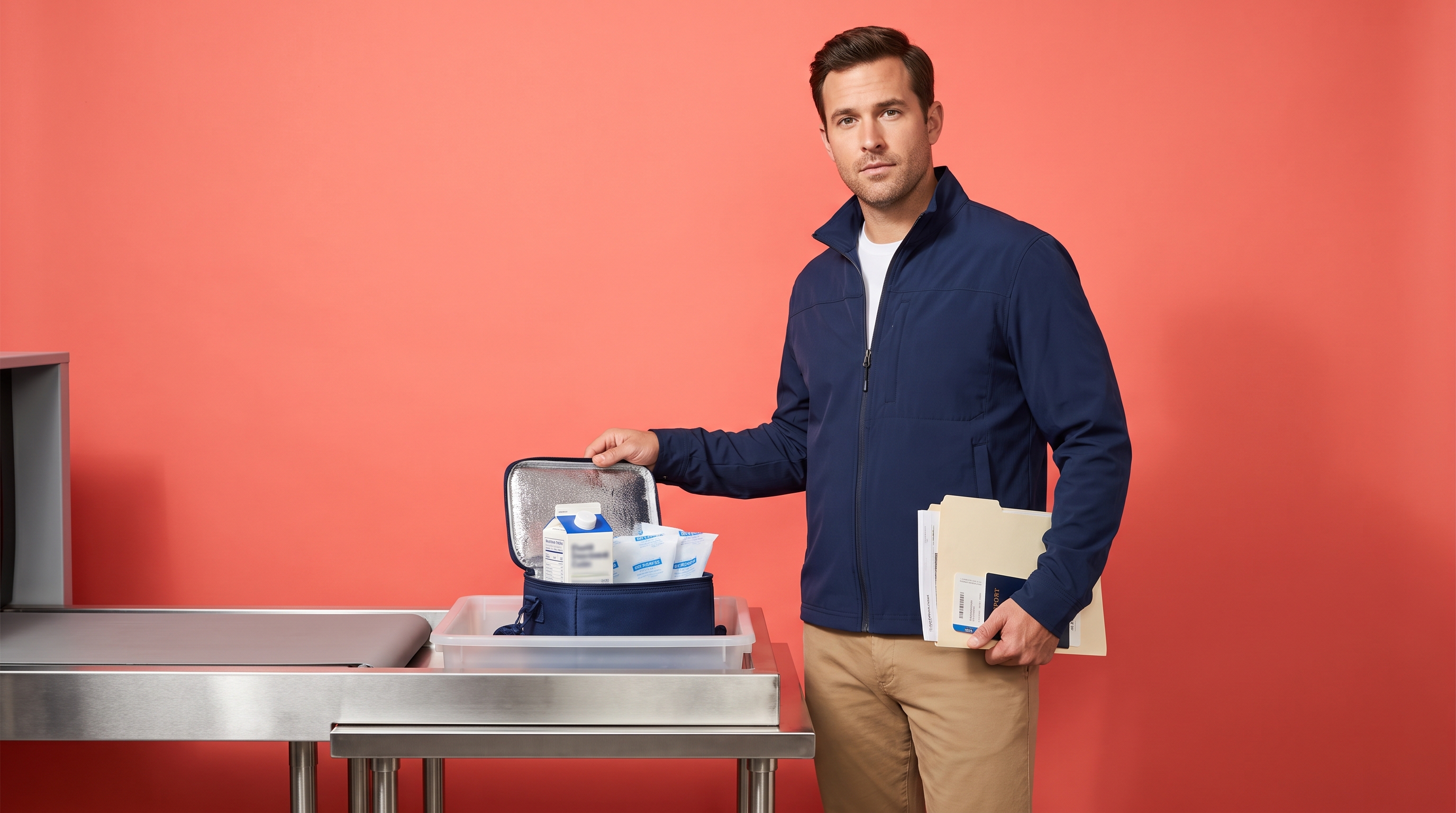
Flying with biologic injections takes a little more planning than packing a bag of pills, because most injectable biologics used for inflammatory bowel disease are refrigerated liquids delivered by prefilled syringe or autoinjector pen. The good news is that federal screening rules are built to accommodate exactly this situation. Once you understand what the Transportation Security Administration allows, how to keep your medication within its temperature range, and which documents to keep within reach, air travel becomes a manageable part of living with Crohn's disease or ulcerative colitis rather than a reason to skip a trip. This guide walks through the security checkpoint, the cold chain, and the paperwork so you can move through the airport with confidence.
What the TSA rules for injectable medication actually allow
The core rule that makes traveling with biologics workable is the medical exemption to the standard liquids limit. TSA permits medically necessary liquids, gels, and aerosols in reasonable quantities, and these are allowed above the usual 3.4-ounce carry-on limit as long as you declare them to officers and present them separately for inspection. A refrigerated biologic clearly qualifies as medically necessary, so you do not need to worry about the small container rule that applies to toiletries.
The needles are covered too. TSA states that unused syringes are allowed when accompanied by injectable medication, and that you must declare these items to security officers at the checkpoint for inspection. In practice this means keeping your pens or syringes together with the medication they deliver, rather than packing them in separate bags. Labeling is recommended but not strictly required, though a pharmacy label removes any ambiguity.
Getting your biologic through the security checkpoint
When you reach the checkpoint, the single most important step is to speak up before screening begins. Tell the officer that you are carrying medically necessary liquids and medication, and take them out of your bag so they can be screened on their own. TSA advises travelers to declare these items and place them in a separate bin for inspection, which may include a visual check or explosive trace testing rather than standard X-ray.
If you are worried about the process or want extra support, TSA runs a dedicated help line. The TSA Cares program coordinates assistance for passengers with medical conditions and can arrange for a Passenger Support Specialist to help you through screening. Calling ahead a few days before your flight lets you ask specific questions about your medication and reduces surprises at a busy checkpoint. Keeping your biologic in your carry-on rather than checked luggage matters here as well, since cargo holds are not temperature controlled and checked bags can be delayed or lost.
How to keep biologics cold while traveling
Temperature is where flying with refrigerated medication demands the most attention. Injectable IBD biologics are designed for cold storage. The label for Humira, for example, directs patients to store it in the refrigerator between 36 to 46 degrees Fahrenheit, 2 to 8 degrees Celsius, and never to freeze it, keeping it in the original carton to protect it from light. Skyrizi carries the same core instruction to store it refrigerated at 2 to 8 degrees Celsius and not to freeze it, also in its original carton. Freezing can permanently damage these proteins, so an over-chilled cooler is as much a risk as a warm one.
Many biologics also allow a limited room-temperature window, which is useful for travel days. Humira's label notes that patients may store it at room temperature up to 77 degrees Fahrenheit, 25 degrees Celsius, for up to 14 days and then discard it if unused. Allowances differ by product, so confirm the exact window for your specific drug with its label or your pharmacist before you rely on it.
For the trip itself, an insulated medical travel case with cooling packs is the standard approach, and TSA screening rules support it. The agency allows medically necessary gel ice packs in reasonable quantities regardless of their physical state, even melted or slushy, as long as you notify the officer for inspection. This is a meaningful exception, because ordinary freezer packs are only allowed through the checkpoint when frozen solid and otherwise must meet the liquids limit. Declaring your cooling packs as part of your medical supplies is what keeps them from being pulled at security.
Documentation to carry with your biologic
Paperwork does two jobs when you travel with biologics: it smooths the checkpoint conversation and it protects you if a dose is lost, damaged, or questioned. The Crohn's & Colitis Foundation recommends that travelers request typed and signed statements from your physician describing your medical history and medications, make copies of all prescriptions including generic names, keep medication in its original container, and always carry it on the plane in case checked luggage goes missing. A short letter on clinic letterhead that names your diagnosis, your biologic, and the need to keep syringes and cooling packs with you can resolve most questions in seconds.
International trips add a layer. The CDC advises travelers to keep medicines in their original labeled containers, carry a note from the prescribing provider for injectable medicines, pack medications in a carry-on, and check the rules of your destination and any layover countries before departure. Some countries restrict specific drugs or require documentation, so verifying entry rules through the destination's embassy avoids trouble on arrival.
A pre-flight checklist for injectable biologics
A little preparation the day before removes most of the friction. Focus on three essentials as you pack.
- Pack the biologic in your carry-on inside an insulated case with cooling packs, in its original light-protecting carton.
- Keep syringes or pens together with the medication and set aside a physician letter plus prescription copies.
- Plan to declare the medication and cooling packs to a TSA officer, and call TSA Cares ahead if you want support.
The question many patients ask, whether they can bring Humira or another biologic on a plane, has a clear answer: yes, injectable biologics and the supplies that keep them cold are allowed in carry-on baggage under the medical exemption. The steps that make it smooth are declaring your medication, presenting cooling packs as medically necessary, keeping your biologic within its temperature range, and carrying documentation that explains what you have and why. With those pieces in place, a refrigerated biologic is one more item you can travel with, and treatment does not have to pause because you left home.
This article is for educational purposes and is not medical advice. It is researched against current AGA clinical guidelines and peer-reviewed sources. Always discuss treatment decisions with your care team.