
Questions to Ask After a Colonoscopy, Plus How to Read the Report
By the Aidy Editorial Team
First Published Oct 19, 2026Last Updated Oct 12, 2026
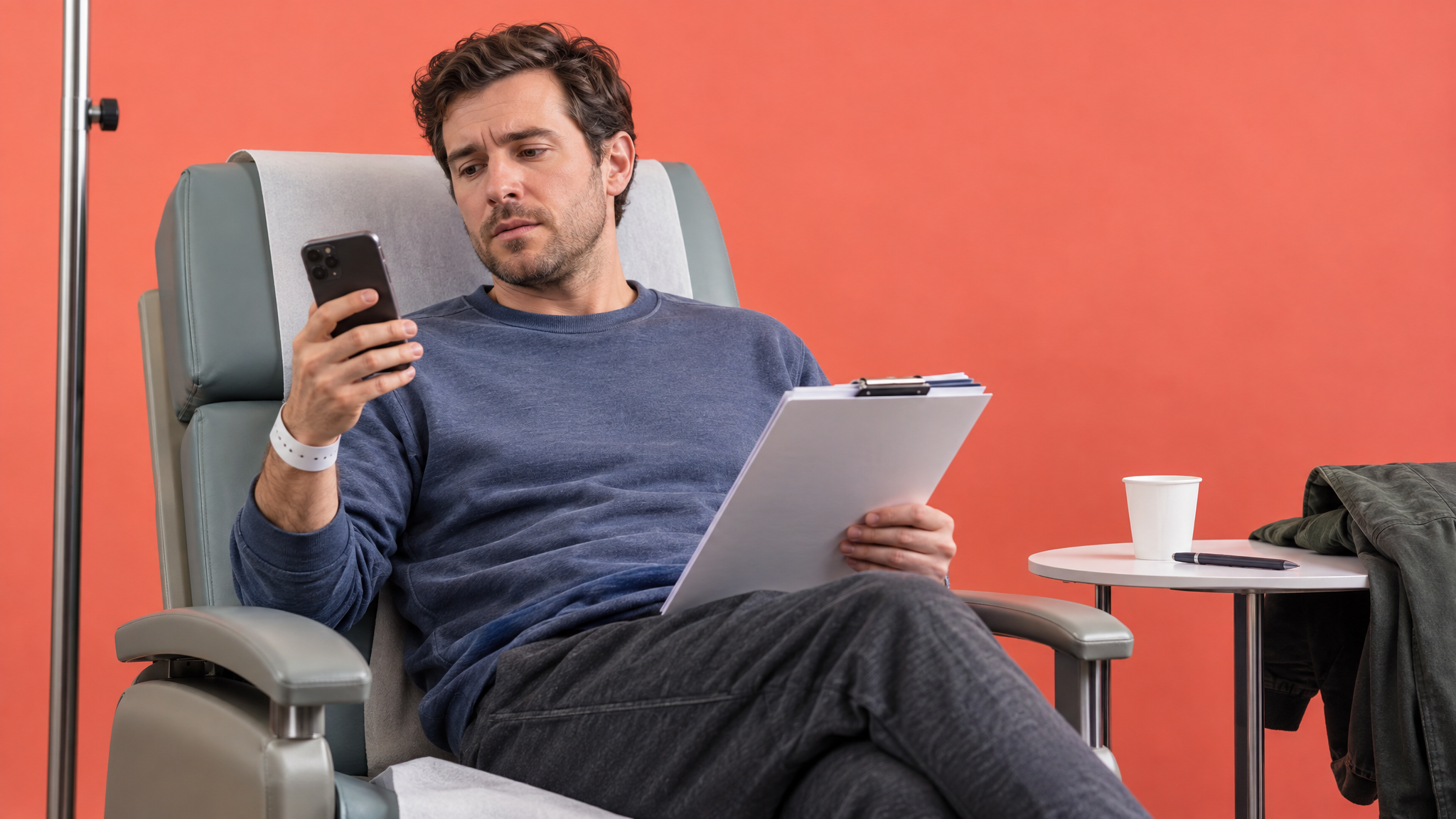
The minutes after a colonoscopy are an awkward time for an important conversation. You are waking up from sedation, and the doctor may stop by only briefly. This guide covers the questions to ask after a colonoscopy at two points: the short talk in recovery and the follow-up visit once biopsy results are back. It also explains how to read a colonoscopy report, what common findings mean and how your next colonoscopy date is set, including why that works differently for people with inflammatory bowel disease (IBD).
Questions to ask before you leave the endoscopy unit
Most people stay at the hospital or outpatient center for about 30 to 60 minutes after a colonoscopy, and this is often when the doctor shares early findings. After conscious sedation you may feel drowsy and not remember much about the procedure, so ask the person driving you home to listen in and take notes. Questions worth asking before you leave:
- What did you see, and did you take biopsies or remove any polyps?
- When and how will I get the biopsy results, and who will explain them to me?
- When can I restart my usual medicines, and which symptoms should make me call?
The medicine question matters most if you take blood thinners or antiplatelet drugs, because bleeding after polyp removal can appear up to 2 weeks after the procedure. Your restart plan for those drugs should come from the endoscopist who did the procedure, so write it down. If you have or may have Crohn's disease, you can also ask whether the terminal ileum, the last section of the small intestine, was examined. Guidance on endoscopy in IBD recommends reaching the terminal ileum during an initial evaluation unless there is a reason not to.
How a colonoscopy report is organized
Most reports follow the same order: the indication, meaning the reason for the exam, then preparation quality, extent reached, findings, impression and recommendations.
Prep quality. This rates how clean the colon was. Bowel preparation is generally considered adequate when it allows the doctor to identify polyps larger than 5 millimeters. Some reports use the Boston Bowel Preparation Scale, which scores three colon segments from 0 to 3 each, and a segment score of 2 or higher is considered adequate. A "fair" or "poor" rating is worth asking about.
Extent reached. The cecum is the pouch where the large intestine begins. A complete exam is documented by naming cecal landmarks, mainly the appendiceal orifice and the ileocecal valve, ideally with photos. If the report mentions the terminal ileum, the scope also entered the end of the small intestine.
Polyp size and type. Size is listed in millimeters, and 10 millimeters is a key cutoff because an adenoma that size or larger shortens the follow-up interval. The type usually comes from the pathology report, and the type of polyp and how it was removed help determine your next exam.
Erythema and friability. Erythema means reddening of the lining. Friability means the lining bleeds on contact or spontaneously. Guidance on IBD endoscopy says reports should note erythema, friability, erosions, ulcerations and loss of the normal vascular pattern. Ulcerative colitis reports may also include an endoscopic score, explained in this guide to the Mayo score.
Impression and recommendations. The impression is the endoscopist's short summary of the main findings. Recommendations list next steps, such as waiting for pathology, a repeat colonoscopy date or a follow-up visit. Any interval written here before pathology returns may be provisional, so ask when you will get the final one.
Common findings in plain language
A polyp is a growth on the lining of the colon. The most common precancerous types are tubular adenomas and sessile serrated lesions, and an "advanced adenoma" is one larger than 1 centimeter or with villous features or dysplasia. Small hyperplastic polyps in the rectum or sigmoid colon carry the same 10-year follow-up as a normal exam in people without IBD. People with long-standing colitis may see pseudopolyps, which are islands of surviving lining between areas of ulceration that can look like polyps.
Diverticulosis means small pouches pushing outward through weak spots in the colon wall, and most people with it have no symptoms. Hemorrhoids are swollen veins around the anus or lower rectum.
Words like inflammation, colitis or ileitis describe how the lining looked. Endoscopy alone has limited value in telling IBD apart from other types of colitis, and doctors combine biopsies with history, blood tests and stool tests to diagnose ulcerative colitis and rule out infection. For IBD findings in detail, see how to read a UC colonoscopy report or a Crohn's colonoscopy report. If your colonoscopy was normal but symptoms continue, read about a high calprotectin with a normal colonoscopy.
Biopsy results: when and how you will get them
Biopsy results can take a few days or longer. The National Cancer Institute says the pathologist typically sends the report to the doctor within 10 days, so ask for an expected date before you leave and call the office if it passes without word.
You may see the results before anyone explains them. Pathology results often appear in the patient portal at the same time the doctor receives them, and federal information blocking rules mean patients may be able to access test results in parallel with the ordering clinician. Knowing who will call you, and when, makes an unexplained portal notice easier to handle.
A pathology report usually has a gross description of the tissue samples, a microscopic description, a diagnosis section summarizing the findings and a comments section with added detail. You can also ask to discuss the report with the pathologist.
When is your next colonoscopy?
For people without IBD, 2020 US Multi-Society Task Force guidance bases intervals on pathology. A normal, high-quality colonoscopy leads to a repeat in 10 years, one or two tubular adenomas under 10 millimeters lead to 7 to 10 years, any adenoma 10 millimeters or larger or with villous features or high-grade dysplasia leads to 3 years, and more than 10 adenomas leads to 1 year. These intervals assume an exam completed to the cecum with adequate prep and complete polyp removal.
Polyp surveillance intervals do not apply to IBD. The same guidance states that its recommendations do not apply to people with a personal history of inflammatory bowel disease or a hereditary colorectal cancer syndrome. If you have ulcerative colitis or Crohn's disease involving the colon, a normal exam does not mean another 10 years. Your gastroenterologist sets a separate surveillance schedule based on your individual risk. Factors that raise colorectal cancer risk in IBD include longer duration and greater extent of colitis, family history of colorectal cancer, primary sclerosing cholangitis and past dysplasia. Ask which of these apply to you and when your next surveillance exam is due.
Warning signs after a colonoscopy
Light bleeding from the anus is normal after a biopsy or polyp removal. Serious complications are uncommon: in screening colonoscopy, perforation occurs in about 3 of every 10,000 procedures and bleeding in about 15 of every 10,000.
NIDDK advises seeking medical care right away for severe abdominal pain, fever, bloody bowel movements that do not get better, bleeding from the anus that does not stop, dizziness or weakness. Because delayed bleeding can appear up to two weeks later, keep these signs in mind beyond the day of the procedure, especially if polyps were removed. Before you leave, ask which number to call on nights and weekends.
Questions for your follow-up appointment
The follow-up visit, or the phone call with your results, is the time for the questions that depend on pathology:
- What did the biopsies show, and does that change the plan?
- Was the exam complete to the cecum, and was the prep rated adequate?
- What is my final interval for the next colonoscopy, and why?
If you have IBD, ask how active the inflammation looked, how much of the colon or ileum was involved, whether the findings match your symptoms and whether your treatment should change. If the report includes a Mayo score or another endoscopic score, ask what it was at your last colonoscopy so you can compare. Ask for copies of both the procedure report and the pathology report for your records.
If your colonoscopy has not happened yet
A few questions before the procedure make the conversation afterward easier. Ask which bowel prep you will use and how to time the doses, because finishing the prep completely affects what the doctor can see. Ask how to adjust any medicines beforehand, and arrange a ride, since you won't be able to drive after the procedure. If IBD is suspected or known, ask whether biopsies are planned and whether the terminal ileum will be examined.
A colonoscopy produces two documents, the procedure report and the pathology report, and the full picture comes from both. Asking clear questions in recovery, bringing someone to remember the answers and following up on biopsy results gives you what you need for next steps. For people with IBD, the polyp-based schedule does not apply, and your gastroenterologist sets surveillance timing around your own disease history and risk.
This article is for educational purposes and is not medical advice. It is researched against current AGA clinical guidelines and peer-reviewed sources. Always discuss treatment decisions with your care team.