
Traveling With an Ostomy: Airport Security, Supplies & Emergencies
By the Aidy Editorial Team
First Published Jul 6, 2026Last Updated Aug 4, 2026
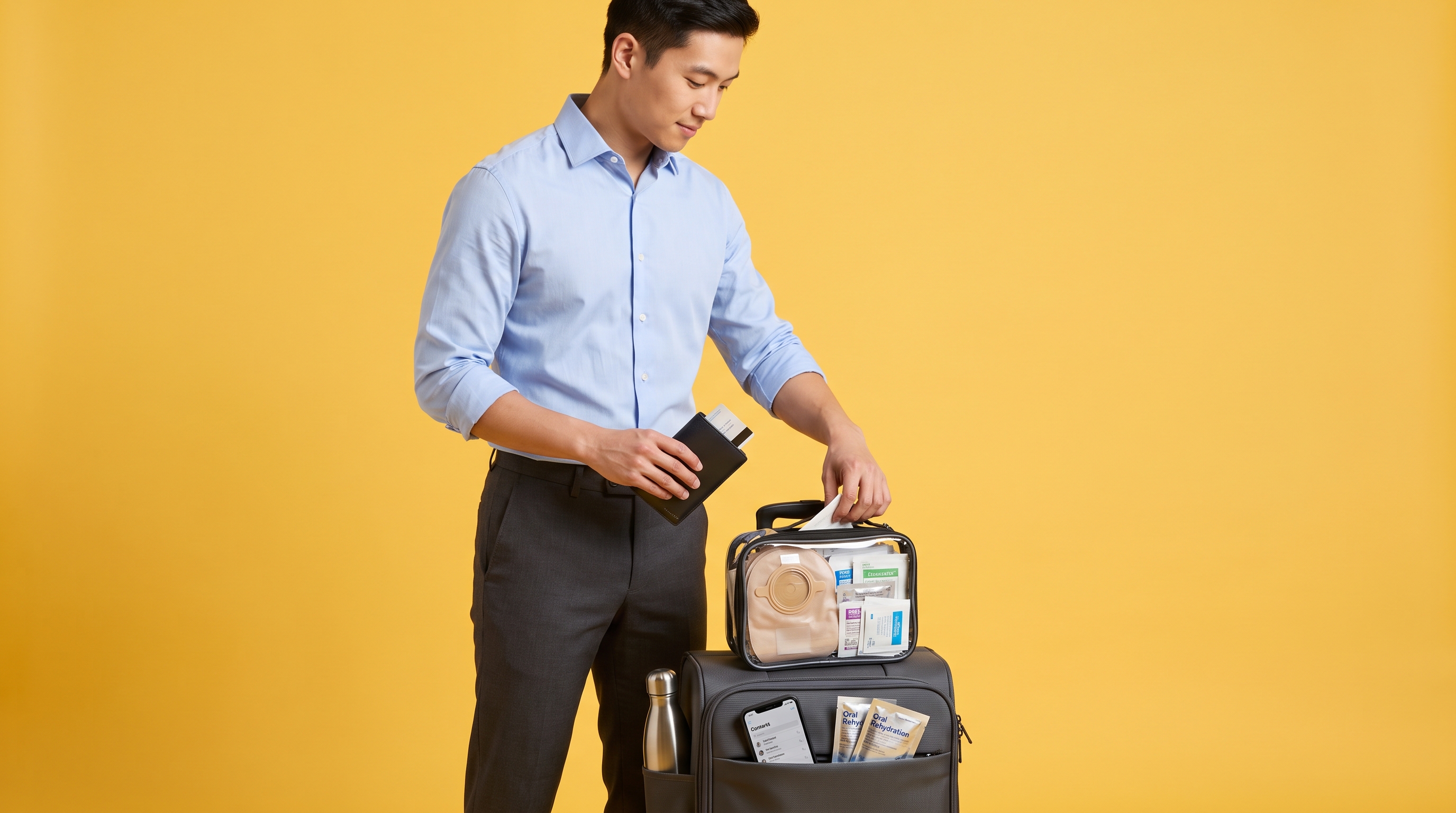
Traveling with an ostomy takes extra planning, but it does not have to keep you close to home. Air travel raises the most questions, because ostomates worry about how a pouch will be handled at security, whether they will run out of supplies, and what happens if something goes wrong far from their usual medical team. The good news is that ostomy supplies are permitted through security checkpoints and screening officers are trained to handle medical devices sensitively, according to the Crohn's & Colitis Foundation. With a clear checklist covering screening, supplies, documentation, hydration, and a backup plan, most trips become a matter of preparation rather than luck.
How Airport Security Works When You Have an Ostomy
Screening starts with a simple step: tell the officer what is attached to your body. The Transportation Security Administration instructs passengers to inform the officer if they have an ostomy or other medical device attached to the body before screening begins. You do not have to prove anything or hand over the device. TSA confirms that you can be screened without having to remove or expose the ostomy pouch, medical ports, or a catheter.
Most travelers pass through the advanced imaging technology scanner, a metal detector, or a pat-down without incident. The United Ostomy Associations of America notes that additional screening may include a self pat-down of the pouch followed by explosive trace testing of your hands, and that emptying the pouch before you arrive at the checkpoint makes the process easier. Knowing the sequence in advance removes much of the anxiety that surrounds airport security with an ostomy.
Getting Help Through the Checkpoint
If you want support before you fly, TSA Cares coordinates assistance for travelers with medical conditions. You can reach the program at (855) 787-2227, and TSA recommends calling at least 72 hours before departure so the request can be arranged in time. At the airport, you may ask for a Passenger Support Specialist, a TSA officer with additional training in assisting passengers with disabilities and medical conditions.
A discreet option is the TSA notification card that UOAA provides. The card lets you communicate a health condition or medical device to officers without explaining it out loud, and it was developed so TSA officers recognize it and respond with discretion. It is worth understanding one limit: presenting the card does not exempt you from screening, and you can always request private screening with a companion present if that feels more comfortable.
How Many Ostomy Supplies to Pack for Travel
The core rule for ostomy travel supplies is redundancy. The Crohn's & Colitis Foundation advises packing supplies in at least two places, both your carry-on and your checked bag, in case your luggage is delayed. Keep the working set in your carry-on so your essential supplies stay with you at all times, and treat the checked bag as a backup rather than your primary stash. UOAA further recommends taking extra supplies beyond what you expect to use, in case you are stranded somewhere supplies are hard to find.
A practical packing checklist for a trip includes:
- Pre-cut pouches and skin barriers, which spare you from packing scissors
- Adhesive removers, barrier wipes, and disposal bags
- A change of clothing and extra underwear in your carry-on
Liquids deserve special attention. TSA allows larger amounts of medically necessary liquids, gels, and aerosols in reasonable quantities, as long as you declare them to officers for inspection, which places items such as irrigation solution and larger adhesive removers outside the standard 3.4-ounce limit that applies to ordinary carry-on liquids under the 3-1-1 rule. One in-flight tip: the Foundation suggests releasing gas from the pouch before takeoff, because cabin pressure changes can cause the pouch to expand.
Documentation to Carry
Paperwork smooths the path through both security and any medical situation abroad. Ask your physician for a typed and signed statement describing your medical history and the medications you take, which is useful for customs officials and for any clinician who treats you away from home. Carry the UOAA TSA notification card alongside that letter so you have both a discreet checkpoint tool and a formal record.
For international trips, language can become a barrier at exactly the wrong moment. UOAA recommends carrying critical ostomy information written in the language of the countries you are visiting, so a pharmacist or emergency clinician can understand what you need. Storing these documents in more than one place, such as a printed copy and a photo on your phone, means a lost bag does not leave you without them.
Staying Hydrated and Preventing Dehydration
Hydration is a central concern for ostomates, particularly those with an ileostomy or high-output stoma. The Crohn's & Colitis Foundation reports that the majority of ostomy-related hospital readmissions are due to dehydration, which makes fluid planning a safety issue rather than a comfort one. The same guidance suggests aiming for eight to ten 8-ounce glasses of fluid across the day and sipping between meals rather than gulping large volumes at once.
Travel amplifies the risk, since long flights, heat, and unfamiliar food can all raise output. When diarrhea strikes on the road, the Foundation advises drinking plenty of fluids and using only boiled or bottled water. Rehydration solutions that contain sodium and glucose replace what plain water alone cannot, so packing a few oral rehydration packets is a small investment against a serious setback.
Building a Backup Plan for Emergencies
A backup plan turns a scare into an inconvenience. Before you leave, ask your physician for the names of doctors in the cities you plan to visit, or search the Foundation's medical expert database for local providers. Save those contacts alongside your own care team's number so help is one tap away.
Give yourself margin at the airport, too. UOAA recommends arriving at least two hours early for domestic flights and three hours early for international flights, and packing roughly a week of extra supplies for foreign travel in case a delay or quarantine strands you. Building the whole plan, the supply list, the documents, the hydration packets, and the emergency contacts, before you reach the airport is what lets you focus on the trip itself rather than the logistics of managing an ostomy while you travel.
This article is for educational purposes and is not medical advice. It is researched against current AGA clinical guidelines and peer-reviewed sources. Always discuss treatment decisions with your care team.