
Road Trips With Crohn's or UC: A Patient Planning Guide
By the Aidy Editorial Team
First Published Jul 20, 2026Last Updated Aug 4, 2026
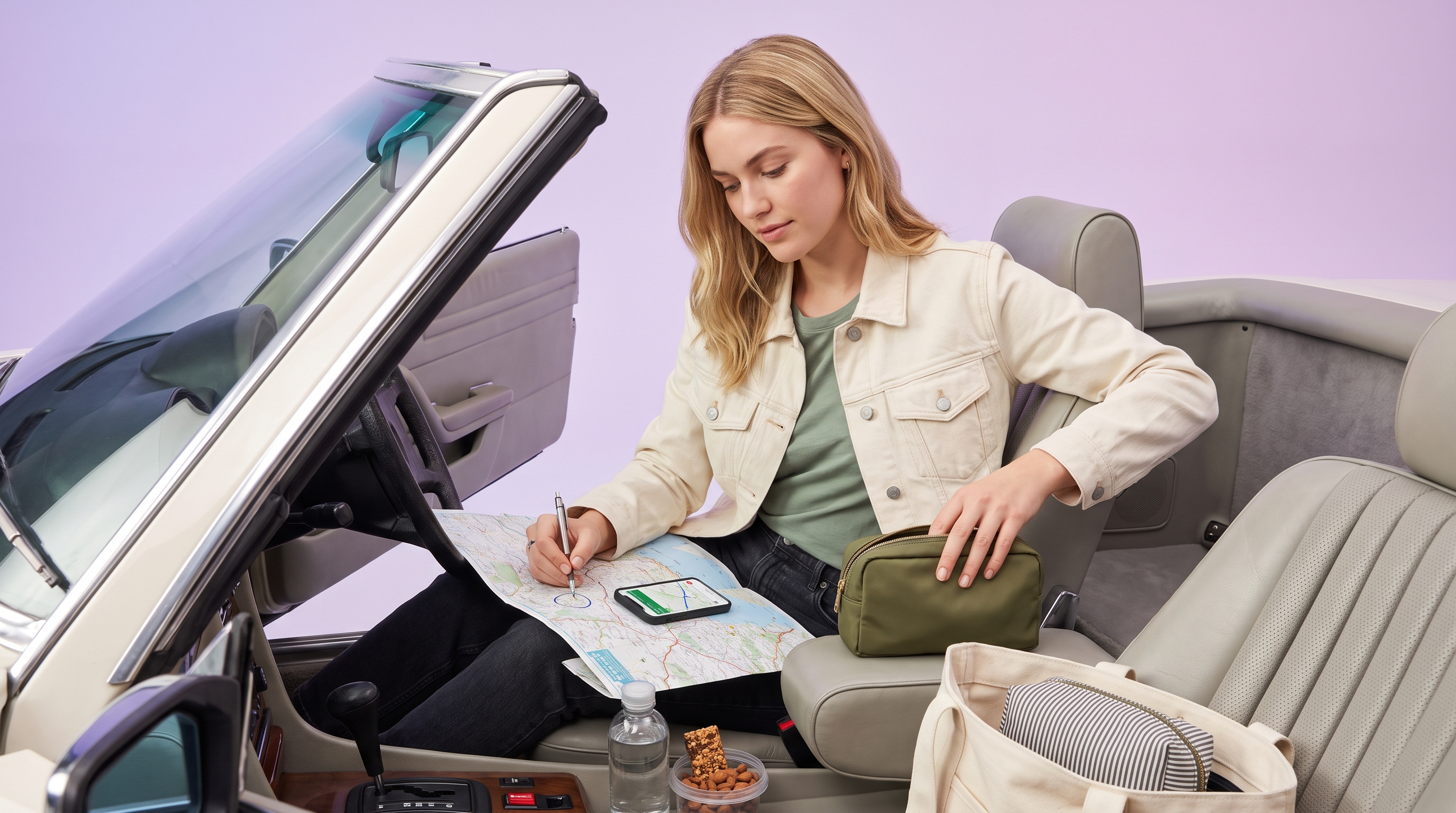
A road trip with Crohn's disease or ulcerative colitis rewards planning more than almost any other kind of travel. The open road means you control the stops, the food, and the pace, but it also means bathrooms are not always where you need them. A little route-level preparation turns the uncertainty into a manageable checklist: where you will stop, what you will eat, how your medications ride along, and what you will do if symptoms flare far from home. This guide walks through each piece so you can build a plan before you turn the key.
Map Your Bathroom Stops Before You Leave
Bathroom planning for road trips starts with knowing where facilities are along your route. The Crohn's & Colitis Foundation recommends downloading the We Can't Wait restroom finder app, which lets users locate publicly accessible restrooms and identifies establishments that are aware of and sympathetic to the needs of people with inflammatory bowel disease. The app draws on roughly 45,000 places across the United States, combining businesses that volunteer their restrooms with locations contributed anonymously by other users. Before departure, scan your planned route for gas stations, rest areas, and restaurants at regular intervals, and note gaps where services thin out so you can time meals and fluids accordingly. Michigan Medicine similarly advises travelers with IBD to identify rest stops in advance on road trips rather than hoping something appears when urgency hits.
Know Your Restroom Access Rights
When a public restroom is not available, the law may be on your side. Ally's Law, formally the Restroom Access Act, was first passed in Illinois in 2005 after teenager Ally Bain, who has Crohn's disease, was denied use of an employee restroom and had an accident. According to the Crohn's & Colitis Foundation, the Restroom Access Act has been enacted in 20 states and generally requires businesses to open employee-only restrooms to customers with qualifying medical conditions when a public one is unavailable. The state-by-state law tracker notes that covered conditions include Crohn's disease, ulcerative colitis, and irritable bowel syndrome, and that businesses must allow access when it can be reached safely and at least two employees are on duty. Carrying documentation helps. The Foundation offers a free "I Can't Wait" identification card, available by calling 888-694-8872, that is often accepted as proof of your condition.
Pack a Food and Snack Plan
Bringing your own food gives you control that roadside options rarely offer. Pack safe snacks for an IBD road trip that you already know your gut tolerates, and keep them within reach so you are not forced into unfamiliar fast food when hunger strikes. The Crohn's & Colitis Foundation suggests travelers bring a snack of their own rather than relying on whatever is available, which is easy to apply in a car where you can stock a cooler. Familiar, low-residue options such as crackers, bananas, plain rice, or nut butters travel well and do not require refrigeration for short stretches. Portioning food into single servings makes it simple to eat small amounts often, which many people find easier on the digestive tract than large meals during long hours of sitting. Keep a supply of bottled water on hand as well, both for drinking and for taking medications on schedule.
Keep Your Medications Travel-Ready
Traveling by car with IBD does not exempt you from careful medication handling. The CDC advises travelers with chronic illnesses to pack enough medicine for the length of the trip plus several days extra in case of delays, and to keep all medications in their original containers. Even on a road trip, keep your medicines with you in the car rather than buried in luggage, echoing the Foundation's guidance to always carry your medication with you. Michigan Medicine recommends obtaining a signed letter from your gastroenterologist that lists your condition, medications, and doses, which is useful if you need a refill or care on the road. If any of your medications must stay refrigerated, ask your pharmacy how to keep them cold safely during transit before you leave.
Stay Ahead of Dehydration
Diarrhea from IBD or a stomach upset on the road can pull fluids and electrolytes out of your body quickly. The NIDDK explains that when you have diarrhea, you need to replace lost fluids and electrolytes to stay hydrated, recommending water along with liquids that contain electrolytes such as broths and sports drinks, or oral rehydration solutions that contain glucose and electrolytes. The CDC likewise emphasizes that fluid and electrolyte replacement is important during travelers' diarrhea, particularly for adults with chronic medical illness, and suggests keeping oral rehydration solution on hand. Packing a few electrolyte packets in your travel kit is a small step that pays off if a long drive turns rough. Sip steadily rather than waiting until you feel parched, and be cautious with very sugary drinks in large amounts.
Build a Flare Contingency Plan
Knowing what to do if a flare starts while traveling keeps a rough patch from becoming a crisis. Ask your doctor for a written action plan in case your condition worsens away from home, and carry your physician's contact information and insurance card. Pack a comfort and cleanup kit with your own toilet paper, soothing wipes, plastic bags, and a change of underwear and clothes, all of which the Foundation recommends for exactly this scenario. Before a longer trip, Michigan Medicine suggests contacting your insurance company to understand coverage rules if you need care in another region. The CDC recommends assembling a travel health kit that includes an oral electrolyte solution and any prescribed medications. If symptoms escalate to severe pain, persistent vomiting, high fever, or signs of dehydration, seek medical care rather than pushing on.
A road trip with Crohn's disease or ulcerative colitis is well within reach when the logistics are settled in advance. Mapping restrooms, understanding your access rights, packing food and medications with margin to spare, and keeping a flare plan ready together let you spend the drive thinking about the destination instead of the next exit. Plan the route once, write the details down where you can find them quickly, and the road becomes far more forgiving.
This article is for educational purposes and is not medical advice. It is researched against current AGA clinical guidelines and peer-reviewed sources. Always discuss treatment decisions with your care team.